
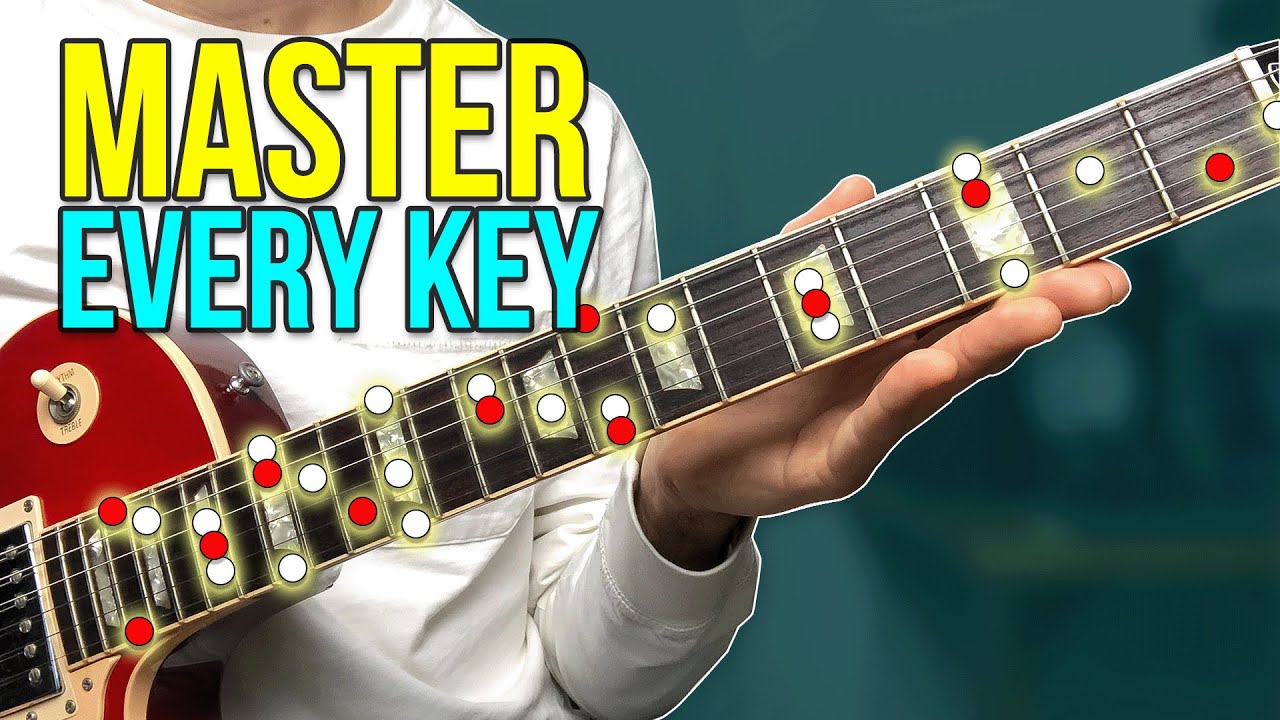
After each pass the video waits as long as the loop, so you can play it back.
Start slower with −, and it climbs to 100%.
Keys: Space play · ← → 5 s · [ ] set start and end · − = speed · L loop
Fretboard and scales · Intermediate
Learn To MASTER Guitar Soloing In All 12 Keys!
In this lesson
Tap a time to watch that part. loops it, so you can slow it down and play along.
-
Fix Cheating keys by moving shapes
Guitarists change key by sliding a known shape up or down a few frets, always seeing a key in relation to another key's shape; practicing around the circle of fifths in one position prevents cheating your way out of keys by moving shapes.
-
Key idea One note changes per circle-of-fifths step
Moving counterclockwise around the circle of fifths, each new key differs by one note: lower the 7th of the current key a half step to reach the next key (C->F: B to Bb; F->Bb: E to Eb ...).
-
-
Exercise All 12 keys in one position
Stay in one fret area (here frets 7-11) and move through all 12 major keys counterclockwise, changing only the one note each time, naming notes and degrees; you end up playing all five major-scale positions. Then repeat in every position.
-
Key idea Key signatures beat step formulas for recognition
Knowing key signatures (Eb has Bb Eb Ab) lets you know the notes of a key without computing W-W-H, and recognize a key when you see those accidentals in music.
-
Key idea Mode needs the bass (again)
The A-flat-major pattern starting on C is not C Phrygian unless C is in the bass; over an A-flat chord it sounds like A-flat major.
-
-
Key idea Names of the notes make keys stick
Learning all 12 keys by knowing the notes in each key and practicing them in one position makes the same patterns recur, and you remember them far better than memorizing shapes while avoiding the notes.
-
Exercise Two bars per key around the circle backing track
Solo over a track that changes key every two bars around the circle of fifths; the goal is not an amazing solo but getting through every key comfortably and solidly.
-
Practice it
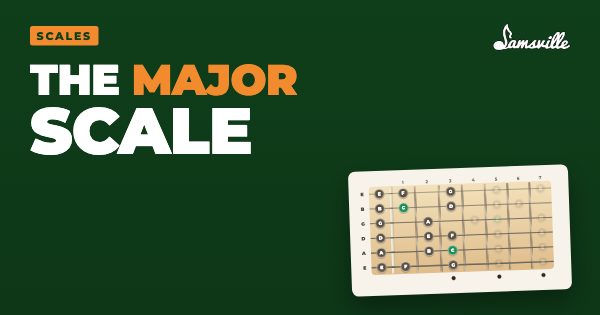
- F major, four notes per string. The same pattern as C major with every B lowered to B♭.From the guide: The Major Scale on Guitar Open in Jamsville
- The sharp keys, G through C♯: which notes each one sharpens.From the guide: The Major Scale on Guitar Open in Jamsville
- Guide Guitar Modes ExplainedFor “Mode needs the bass (again)”. Hear what makes each mode sound the way it does, then play Dorian and Mixolydian over a band, leaning on the one note that gives each its sound. Read it
The guide
In the learning path Know the Fretboard and Every Key.
Transcript
YouTube's automatic captions. Tap a time to watch from there.
- so in today's lesson I'm going to be showing you a great way to be able to Solo in all 12 keys and this will really really help you master the guitar fretboard as well so without further Ado
- let's just jump right into it so before we actually get into the guitar playing and we're going to be showing some stuff on some diagrams on screen I just want to show you something really quick here which is that we're going to be using the circle of fifths in order to practice playing in all 12 keys this is a great way to practice uh and a good
- order to go through all the different Keys rather than a lot of times guitar players H if they want to practice in another key they think oh well I already know the key of C or whatever key it happens to be comfortable you happen to be comfortable with and I'm just going to move everything up a fret or everything down two Frets and we're always kind of seeing a key in
- relation to another key in terms of the shapes as guitar players so practicing along the circle of fifths is going to help with that because you're going to see that we're not going to be able to just cheat our way out of the keys by uh just moving shapes over okay so those of you who might not have an experience with the circle of fifths uh this this
- is going to be a great great way uh to introduce yourself to the ideas and if you notice if you go along the circle of fifths there are different key signatures I've talked about key signatures before basically every time we move let's say counterclockwise we start with C at the top we're going to move counterclockwise in this case in
- this video along the circle of fifths and every single time actually you change Keys only one note is actually going to change in order to get to that key so that's going to be sort of the bulk of what we're going to be talking about is how we can find another key by actually finding the note that needs to
- change rather than just going ahead and moving shapes around which can be very useful as well not discounting that but this is going to help you tremendously what we're going to be doing is going through all of the 12 different major keys and we're going to be going counterclockwise along the circle of
- fifths um sometimes by the way people call the circle of fourths because actually if you go in counterclockwise like C the next one's f c up to F is actually a fourth but C down f is a fifth so fourths and fifths are kind of a mirror image of each other in that way so with that being said some of you may
- recognize if you saw my last week's video we were talking about the different positions of the major scale so this is going to be one of the positions written down here and it's going to be in the key of C major so if you know your notes in the
- Key C major first of all you should know them on every single string I've made videos about this before you should be working on that before you get to this if you haven't worked on that we are going to figure out how do we get to F so if you've watched any of my other videos before or you may have taken the Jamesville GPS fretboard fundamentals course we talk extensively about key
- signatures and how to figure out what notes are in a key by using the key signature and it's a very important thing we're not going to get too it to death we're just going to go through what they actually are we're not going to go over every single detail about figuring out what keys are in or what notes are in a given key but I'll just tell you right now that if we go on the
- left okay we go counterclockwise on the circle of fists we're going to be adding one flat note every single time so the order of flats by the way for all the flat Keys is B flat E flat a flat d flat g flat C flat and F actually flat believe it or not and the Order of
- Sharps when we start getting the sharp Keys is the opposite so let's say uh if I know that order of flats and I know that the key has two Flats in it I know okay the order of flats is B flat E flat a flat d flat g flat C flat and F flat if it has two Flats I just take the first two so I can just know actually if
- you see on that circle of fifths it tells you how many flats or how many sharps are in the key so if I know how many flats or Sharps there are and I know the order of sharps or the order of flats I can easily figure out what Flats those are cuz it doesn't do us any good to know that there's one flat if I don't know which one it right so we can
- actually get to F major very very easily here by adding one flat so the first flat we're going to add is actually going to be B flat so I'm going to take all of the B's here in this pattern and I'm going to move them to B flat so this one I'm actually not going to move over here it could if I wanted to I'm going
- to go ahead and move it over here uh change string so now all of a sudden all I did was that and now I am playing in the key of f instead and if I'm playing a chord progression in the key of f that's going to be sort of the full major scale that
- I'm going to use so we're going to rinse and repeat this process and then what we're going to do is we're going to solo over a track that actually is going to go through all 12 keys we're going to see if we can actually go ahead and get through that and basically Solo in all 12 Keys all in very very quick
- succession this is a fantastic way to practice so we went from the key of C to the key of F and now we're going to continue rolling counterclockwise on that Circle of fifth so I hope you're paying attention that in the lower leftand corner so be flat is going to be the next key so we're going to take one note and it's going to be E flat so
- we're going to take all of our e and we're g to make them flat by the way if you're familiar actually with counting and labeling the notes and scales so now we're in the key of f of course so f is the new one so f is 1 G is 2 a is 3 B flat is four C is 5 D is 6 e is seven and F is the root again but now we're
- going to take e and we're going to lower it to E flat so if you notice actually e is the seventh and by the way there would be actually an e here we're going to goad and lower that one as well to E flat now all of a sudden we have all the notes there in the key of B flat major now I want to just point out that
- actually every single time we change Keys along the circle of fists and we go and add one more flat and keep going counterclockwise it's there's a very easy shortcut that we can remember actually which is that if we take the seventh note in the key that's the one we're going to lower
- a half step to get to the next key so now we're in the key of B flat okay let's go ahead and play through this position really quick and by the way you notice all of a sudden we've already done three of the positions of the major scale but we're staying in one position so we're going to be just doing this in one position for this video however you
- should go on your own accord and do it on all positions so like we're we're practicing all 12 keys in one position out a time but we want to be able to do that in all positions as well right now we're generally the 7th to the 11th fret in that range at the moment so now if I
- play through this that is our whole entire position there of B flat major but we're going to repeat that exact same thing when we go over another key to the key has three Flats E flat major so look now B flat is the one C is the two D is the three e
- Flats the four F is the five G is the six and a is the seventh well guess what what do you know like I said before when we go to the key of E flat we are going to add an A flat we're going to turn all the A's in a flat so again the seventh note of the key moves down and it gets
- us into the next key so all of a sudden now check that out we now have the key of E flat major so it's very very easy actually so you just need to be kind of familiar with your key signatures and by the way
- that really complement I know I know a lot of you know the formula for constructing a major scale whole whole half whole whole whole half uh but the key signature strategy really helps because then you don't even have to necessarily think of all that you just know what the notes are in the key like I just know EF flat boom has B flat E
- flat and a flat in it okay so when I start seeing in a piece of music like a whole bunch of B Flats e flats and a Flats popping up my alarm bells in my head are going oh that's probably in the key of E flat if I had to guess so now E flat would be the new route and then so we have E flat F G A flat B flat c d is
- the seventh well guess what the next key that has four flats is going to be a flat and wouldn't you know what's the note that we have to add to get to a flat it's going to be d flat okay so there now we just changed everything to d flat all the D's to d flat and now Bing Bang Boom we have a key of A flat
- major and of course by the way please don't start telling me that I'm playing a mode okay yes I know if it's I'm playing a mode I'm playing C Fran or whatever it is there it's only C Fran if there's a c in the base okay so like I'll show you
- right now actually let's go ahead and play really quick we're going to play in the key of a flat we're going to just take the little segment of this backing track and playing the key a flat [11:06] so it doesn't really sound like C Fran when you played over an A flat major chord okay I've talked about this before but you know just in case some of you bring it up okay all right so now let's go ahead and we'll continue actually playing each of these over the chord as well too because I think that definitely helps so you can actually hear what's going on and you're going to see it
- sounds really cool actually when we start changing Keys really quickly and it just seems like this cycle that never ends so now we're going to go from the key of a flat to the key of D flat which has five flats and guess what G is the seventh note in the key we're going to lower all our G's to g flat and what do you know there we go now we have the key
- of D flat major and if you notice actually by the way it's very similar to the c major scale that we started with actually it's the same exact pattern just now finally we went up a half step from that c major pattern we started with so we've actually at this point gone through all five positions of the
- major scale now they're just going to be maybe offset by a fret or two to get some of those close Keys like like to C major like d flat and then also um B major etc etc so with that being said d flat could also be called C which would be all seven Sharps this is where
- redundancies start to come in when it comes to naming stuff in music and it's kind of annoying uh but it's just the reality of it is so now this is our first key that actually has two names if you notice looking there so dlat would have five flats or you could call this key of C which then you start giving things dumb names like you start calling this C dsharp you start calling f e
- sharp and and then you also call C you call that BP right we don't want to really deal with those so usually what you do is you just pick whichever one has the least accidentals if you look later on we're going to get to the key of B major and the key of B major can also technically be called C flat again no one actually calls us C flat they're
- just going to use the name b instead okay so let's hear what that sounds like actually we're just going to run that a little bit over flat back in truck [13:41] okay so now we're going to have to go to the key of fgf flat okay so all the way down here on the bottom of the circle of fist by the way this is actually the technically most distant possible key from the key
- of C major so it's a trone away so at this point you got to start transitioning your thinking either one of them is just as annoying thinking of g flat or F sharp this one thing I've talked about uh you'll see right now so let's call it g flat for a second okay so we're going to actually have to lower
- all of our C's to C flat to get to the key of G flat which is quite annoying okay so we're going to go ahead and actually just get rid of this C here because that's going to start making a stretch kind of out of position and then we're going to be left with this which if you notice that is the exact same scale pattern that we're using before
- for the key of f but now it's up a half step okay so uh also there that c needs to go down so now there's the conundrum when it comes to this particular key of G flat or FP okay so if in the key of G flat we could call it C flat we have the
- C flat in there every note is flat except for f actually but if we started calling it The Key of FP major instead so both of them have six flats or six Sharps six of anything is going to be basically the same key six Flats is g flat six Sharps is FP they're the same key just two different ways of naming
- them okay so actually FP would have instead of a C flat it would have a b okay that's better but now instead of this F we'd actually end up having to call this e sharp because we don't want to repeat letters when we're naming the notes in a scale that's one thing you
- don't have to overthink it obviously when you're playing a solo we're not worried about that kind of stuff but just conceptually this right here actually we don't like that because there's a B flat and B in the same scale it's like wait there's no C of any kind and sometimes that can be a little bit confusing so that would be the only reason why we'd use these kind of dumb sounding things
- like uh CF flat or esarp is is just for the sake of keeping all the letters in the key basically so uh with that being said let's just move on from here we're going to play now the key of B major so we're not going to call it C flat we're going to call it B major and guess what
- if we take all the fs which are the seventh note in this key of G flat we are going to lower them to e and we're going to get the key of B major so let's go ahead and rename all of these uh accidentals to Sharps instead because the key of B major has five sharps in it
- okay so there now we've renamed all of the accidentals so we have starting from B we have b c Shar D Shar F G sharp a Shar and B so now we're going to start moving to the key of E let's try to get through these a little bit faster so we're going to move the key of E remember I said take the
- seventh note in the key and lower it a half step so now a sharp is going to come down to a this a sharp is also going to come down to a and now all of a sudden we have a position of the key of E major we're almost through all the keys so now we have this
- and if you notice by the way that's the exact same position actually we can go ahead and re add this e there now that's the exact same position that we used of E flat before but it is up a half step from where it was so now let's just kind of blow through the last three keys a d
- and g notice we're now around the 3:00 position on the circle of fifths we have been going counterclockwise the whole time so the key of A we're going to take all the D's we're going to lower them or sorry we're going to take all the D Sharps and lower them to D natural and that's going to give us the key of A
- again same exact thing before same exact pattern that was the key of a flat before now it's just moved up a half step and it's the key of A now we got to think a is the new root a b c Shar d e f gsh a so G Shar is a 7th now we want to
- go to the key of D guess what we're going to lower all of our G shars down to G so that g Shar goes down to G this G sharp goes down to G now we're in the key of D which is the exact same actually pattern as the key of D flat was before and the same pattern that the key of C was before and then finally
- we're going to come to the key of G and guess what we're going to take the seventh note in this key and we're going to move it down a half step so we're going to take the C sh move it to C we're going to take this C move it to C and we're just going to take this uh C and get rid of it so we don't we don't want any five fretch stretches with uh
- these particular major scale shapes so now all of a sudden we have the key of G we only have one sharp left over so we're going to finally make our way all the way back where we started to The Key ofc by lowering all the fs or all the F Sharps to F so this happens and then
- this happens and then Bing Bang Boom we just actually got back to the key of SE now it just so happens that we kind of actually ended up uh in the next position over of C major okay so you can actually continue this and continue this and continue this going around the circle of fist over and over but let's
- go ahead and instead of uh shifting positions let's just kind of go back to where we started with the exact same uh C major position that was over there so you can see it's about learning this process guys this is the way that I learned how to really play in all 12
- Keys is by actually understanding the notes that are in each each key and then actually practicing them in one position cuz when you practice playing all the keys in one position you're going to end up practicing every single one of your positions of the major scale and you start seeing the same patterns popping up over and over again and if you do it
- like this with actually knowing the names of the notes that are in the actual position trust me you're going to remember them way way way better than if all you're doing is just trying to memorize the shape and you're trying to avoid learning the actual notes so now with that being said I'm going to
- demonstrate soloing over this little track I made on logic where we're going to go around that whole entire thing but in pretty real time so it's going to be two bars on each chord and then we change keys and see if you can follow along with what's going on and I'm just
- going to be kind of running the scale now I'm going to be trying to play any amazing solo my whole goal is simply just to get through every key and be pretty comfortable and solid with it [21:58] n [22:44] and that's it I just got through all of the keys so if you practice doing this exact same process that we just went through I know that at first it's kind of annoying but then you start to remember the order of the circle of fifths and you start to remember exactly what notes are in each key and which
- note change and when they're supposed to change you're going to get super duper good at playing in every single key super duper quickly so if you want to learn how to master the guitar fretboard so you can play in all keys all over the entire guitar neck where I show you exactly how to master key signatures and
- much much more all the Triads that are in every key which you need to be able to nail solos over all the chord progressions you play and not just know the actual major scale that you need to play and much much more many more ways of approaching each key that are going to help you solidify even more your
- ability to Sello then make sure you head on over to jamille. comom right now and pick up the janville GPS fretboard fundamentals course also make sure you head on over to the Jamesville merch store and get yourself a Jamesville t-shirt just like this one it really helps support the channel and these freaking t-shirts look awesome I wear them all the time wear them out and
- about going to the restaurant going to the store hanging out in my house making these videos they fit really well and they're super comfortable also last thing make sure you check out my new song that's called my Divine that's what you're listening to in the background you look me up on Spotify my name is Adam Paul or click the link in the
- description below make sure you subscribe to the channel and hit the like button and until next time listen learn and jam