
After each pass the video waits as long as the loop, so you can play it back.
Start slower with −, and it climbs to 100%.
Keys: Space play · ← → 5 s · [ ] set start and end · − = speed · L loop
Chords and harmony · Intermediate
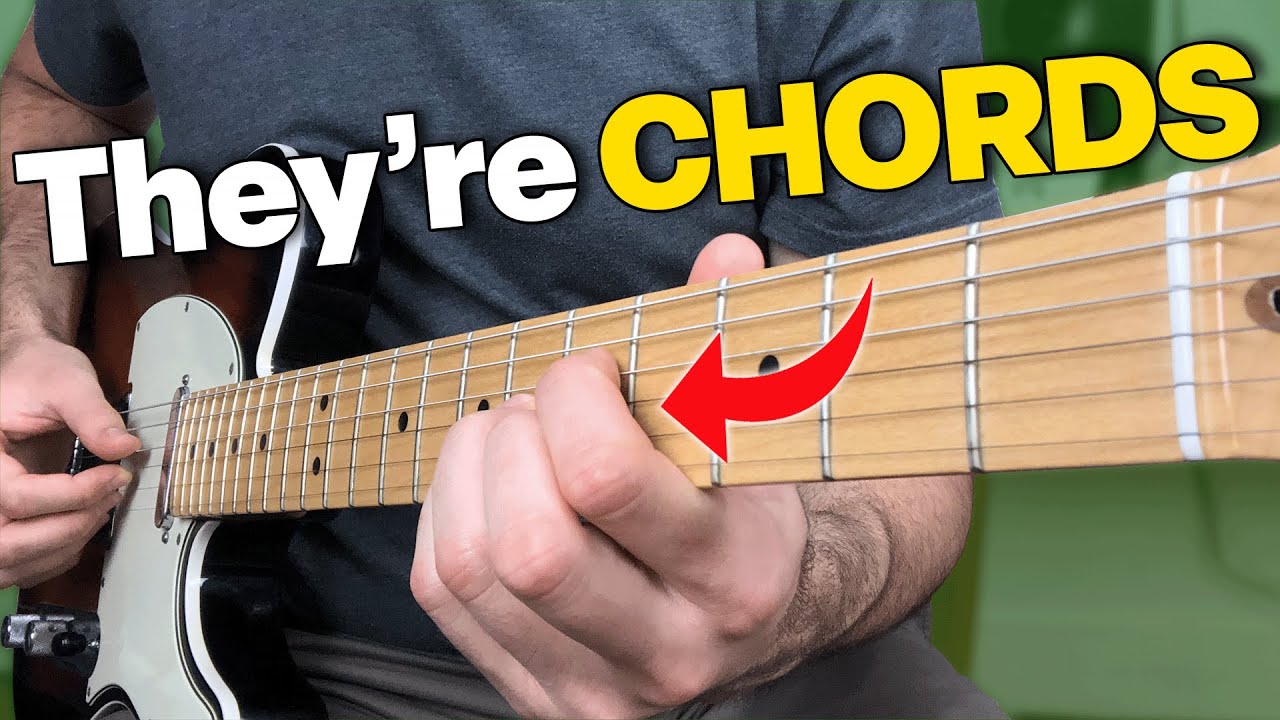
What Everyone Gets WRONG About Modes (They're Not Scales)
In this lesson
Tap a time to watch that part. loops it, so you can slow it down and play along.
-
Fix Modes-as-scales misconception
Most people think a mode is just the parent major scale started from a different note. That breaks down as soon as you don't start on that note or don't play it straight up and down, and running scales is not what real music sounds like.
-
Key idea Modes are chords stacked in thirds
Think of a mode as one big seven-note chord stacked in thirds (Ionian = C E G B D F A), with extensions named 9, 11, 13 rather than 2, 4, 6.
-
-
Key idea The bass note/chord decides how a note sounds
A note's sound depends on its relationship to the bass note and the chord underneath, not on which scale you think you are playing. E Phrygian over a C chord or C bass just sounds major, because E is the major third of C.
-
-
Key idea Chord tones stable, color tones a risk
Separate main chord tones (1 3 5 7) from color tones (9 11 13). Color tones can sound sophisticated but are more tense, so playing them is taking more of a risk.
-
Exercise Sink into each chord tone over a vamp
Practice modes by looping one chord and playing each note against it, hearing root, third, fifth, seventh as stable and 9/11/13 as color tones, one at a time.
-
Exercise Play the whole 13th-chord arpeggio
It is good practice to play the full stacked-thirds arpeggio of a mode (e.g. F A C E G B D for Lydian).
-
-
Key idea Reorient gravity on every chord
Each chord in a progression (e.g. the iii chord = Phrygian vibe, V = Mixolydian) needs you to reorient where the gravity of the notes is; over G the C is the 11th and unstable, so G B D F become the main targets.
-
Key idea Half step above a chord tone clashes; resolve it
Notes a half step above a main chord tone (11 over major, b13 over minor, b9) sound crunchy and want to resolve down; play them but resolve quickly rather than sit. Whole-step neighbors (e.g. b13 over half-diminished) do not clash.
-
Practice it
- C Ionian (the C major scale), root on the 6th string at the 8th fret. The 4 is marked: it sits a half step above the 3.From the guide: Guitar Modes Explained Open in Jamsville
- C Dorian in the same area of the neck. The natural 6 is marked.From the guide: Guitar Modes Explained Open in Jamsville
- A C drone, root only, so it works under all seven modes (Locrian has a ♭5).From the guide: Guitar Modes Explained Open in Jamsville
- The band holds a C minor chord. C Dorian on the board, natural 6 marked.From the guide: Guitar Modes Explained Open in Jamsville
- The band holds a C major chord. C Mixolydian on the board, ♭7 marked.From the guide: Guitar Modes Explained Open in Jamsville
- C Lydian in the same area. The ♯4 is marked.From the guide: Guitar Modes Explained Open in Jamsville
- C Mixolydian in the same area. The ♭7 is marked.From the guide: Guitar Modes Explained Open in Jamsville
- C Aeolian (the C natural minor scale) in the same area. The ♭6 is marked.From the guide: Guitar Modes Explained Open in Jamsville
- C Locrian in the same area. The ♭2 and the ♭5 are marked.From the guide: Guitar Modes Explained Open in Jamsville
- C Phrygian in the same area. The ♭2 is marked, one fret above every root.From the guide: Guitar Modes Explained Open in Jamsville
- The seven chords of C major, two bars each: Cmaj7, Dm7, Em7, Fmaj7, G7, Am7, Bm7♭5. Same seven notes the whole time; the board shows each chord's 1, 3, 5 and 7.From the guide: Guitar Modes Explained Open in Jamsville
- Tool DroneFor “Sink into each chord tone over a vamp” Open
The guide
In the learning path Know the Fretboard and Every Key.
Transcript
YouTube's automatic captions. Tap a time to watch from there.
- so in today's lesson we're going to be talking about what everyone gets wrong about modes and of course I know some of you probably know this already so don't bother leaving a comment saying oh I knew this already okay so but most people get this wrong about mode so without further Ado let's jump right
- into it okay so on the left here we have all of the modes of the major scale listed and I'm listed them out uh in C the modes of the c major scale of course you can apply this stuff to other Keys that's kind of your responsibility to know the notes that are in other keys so you can apply to other keys and most of
- you if you've learned anything about modes you probably know everything that's on there okay so you have the first mode of the major scale is literally just if you play the major scale straight up you start it from the first notes so c d e f g a b and then C you know you can double up the root etc etc and then the way that we get the
- modes or the way that most people think of the modes is by saying okay well if what happens if we take the c major scale or an E major scale and start it from a different note other than the first note of the scale and then what we do is we actually compare what we get by
- starting from a different note of the major scale we actually compare it to the parallel major so for example yeah that might have confused you but check out the Dorian mode so the Dorian mode D Dorian in this case is what happens when we think of the major scale the c major scale starting from a d note right so d
- e f g a b c and then D so most people think that modes are just this they're basically just a scale right it's oh I'm taking the SE major scale and I'm starting it from a certain note and ending on a certain note I'm starting on a different note same thing with frian oh if I started from the e the third
- note that's the frian mode and while this is kind of true to an extent there is more to the story and this is the part that people get wrong when they think about modes they think of them purely as a scale so first of
- all there's a couple of problems with this okay the first problem is that well what happens if I am playing a solo and I don't start on that note right I how is it called frian if I'm just thinking of as a scale that starts on for example e how's it called frian well if I you
- know mix the notes up so instead of doing this I go you know now all of a sudden is that really Fring anymore is it just the mode when I literally play it like that a scale upwards and downwards and if that's the case well that's not super useful because in real music we don't really
- just play scales up and down right Ian you could do that usually most people are not happy what they're playing when they're doing that they they're like oh I sound too much like I'm playing scales so again this is not to uh get super in depth into all of the modes if you don't know anything about modes go watch my other video I have a whole playlist
- actually a link above that is explaining each of the modes sort of from The Bare Bones point of view okay so this is assuming that you already are somewhat familiar with the modes and the stuff that's on the left here so what everybody gets wrong is they don't understand that modes are not really a
- scale they're actually Chords it's almost like we're thinking of all the notes in the scale and thinking of them as one big giant chord that has seven notes in it so now I'm going to go to the next page here and this is now how to think of the modes as
- chords not scales so actually now we have all of the exact same modes it's all the same information that we were just looking at except now the notes are arranged and spelled out in a different order so that we're basically stacking
- them up like one big giant cord here okay so for example if we look at the first mode ionian again you know that's the fancy schmancy mode name for it it's really just the major scale you know starting from the route but if now instead of thinking 1 2 3 4 5 six seven
- now we think of it as one big giant cord that's stacked in thirds so if you notice we have c e g b and then d f and a so we think of this as like one big giant chord and I actually am going to play it on a piano here for a second so we think of it as one big giant chord
- which is like c e g b d f a that is really the sound of the ionian mode and of course it sounds really kind of complex and it should sound complex it's a freaking
- chord that has seven different notes in it okay now of course that's literally just stacking them up in thirds if you're a really good piano player piano players will kind of do this stuff a lot where they'll rearrange those notes in different octaves you know they might play C and G and they might Play The A next to that and they might play the B they might play it all as a giant
- cluster basically you can almost just do this and like somebody they didn't know any better they think oh wow that's some amazing chord really it's just playing all the white keys all right next to each other on the piano but this is the real way that we want to think of modes we want to think of them as cords and the reason
- is because the only way that we're going to get the sound of a particular mode is the same thing of how chords work the most important note in a chord is the root note or the base note actually particularly the lowest note in the chord so for example now if we play I'm
- going to put on a backing track that's got a C chord going in the background well what's Happening Here the piano is playing a C major cord and there's a c in the base so now if I play any of these notes I want to familiarize myself with what are the chord tones the
- root third fifth and the seventh depends on what style you're thinking of if the Seven's going to be a chord tone and then the color tones or you could also think of as the non- chord tones so if I play over this chord c is the root and then e is the third G is the fifth B is the
- seventh and then now I'm getting into DF and a those are going to be my kind of more colorful sophisticated sounding notes over this chord so D would be the ninth now by the way we're thinking of as 9th 11 and 13th not 2 4 and six cuz we're thinking of this idea of stacking it like a giant chord right so this
- would be D and then this would be F the 11th that's actually a very very tense sounding note over that chord right and then a the 13th so as you can hear this is really
- the way to actually understand each of the different modes now another thing I've seen people bring up is like well what if I play let's say I play one of the modes of the major scale let's say frian I was talking about that one before you know so starting the scale on
- an E note the third note of the major scale guess what I can think of that all I want to but if there's a C major chord in the background it ain't going to sound like frian okay cuz when I play that e note it's going to sound like the third of the c major chord so let's stay in the c major chord and now I'm going
- to going to play the frian scale the E Fran scale over it it doesn't really sound like frian frian is supposed to be a minor chord A frian is a very dark tense sounding mode
- it still sounds very happy and bright why because there's a freaking C major cord in the background it doesn't matter what like order I'm thinking of the scale playing it in because each of the notes has to relate to the chord underneath that's the most important
- thing that you need to understand is the way the notes sound depends on how they relate to the Basse note and ultimately the chord that's being uh played in the background by the way even if I just removed let's remove this piano for a second now just just have C in the background just a c bass note and it's
- still going to sound like oh look I'm playing E I just played an e Fran scale over the C Bas note it ain't sound like frian it doesn't sound dark and gloomy or anything like that it sounds nice it sounds like you know like major cuz that sounds like the major third cuz it is
- because the intervalic relationship between that e and the C underneath is that the E is going to be the major third so let's really beat this topic into the dirt here because now we're going to go through each of the other modes and see how it sounds okay so now we have a D in the base and we have a D
- minor chord in the background so now of course I get d f a and C as my uh chord tones like a seventh chord so d f a c so each of those notes has a character to it when it's related to that D
- underneath now we're going to go to the 9th 11th and 13th so e is the ninth ooh that's a very nice sounding note it doesn't sound like a chord tone but it sounds very cool and sophisticated what about the 11th G and B the
- 13th this 13th over that minor chord sounds also very sort of colorful and sophisticated if not a little bit tense so again let's try that test I'm going to play let's say I'm going to play the c major scale now over the D minor chord I'm going to start on C let's try it I'm
- going to start on C I'm just going to literally play a stock C major scale now you can kind of hear that it's a major scale cuz it's such a strong sound but when I play that
- c it sounds like the flat seven of the chord it doesn't sound like the root of a C major scale sounds like the flat seven now this sounds like the root of the chord cuz it is this is D and then e there's your ninth and then the flat [12:42] three so now let's move on to E minor okay the E Fran mode okay so same thing all of those different notes are going to sound different over the over the chord because of the chord and the Basse note is different underneath they're all
- the same notes but they sound kind of different because they relate differently so let's try actually look let's play a C major scale over this like that c sounds sounds very
- tense over that chord why because that c is not actually one of those main chord tones in that frian mode that frian mode the main chord tones are e GB and D so those are going to be the more stable sounding notes over it so if you see that very deliberately separated the
- main cord tones from the color tones and color tones they can sound really nice but sometimes they can sound a little bit more tense and this is why you're taking a little bit more of a risk when you play those color tones now of course the way that you get really good at this is actually practicing exactly like this
- and saying hey let me play over a chord and let me really really sink my teeth into how each of those chord tones sound so like you know if I'm practicing frian playing over by the way this would be like the three chord if I'm playing over a chord progression that's passing by and I'm on the three chord this is basically the vibe that's
- going to be happening is Friant so I'll be like okay what does e sound like cool that's the root it sounds like a root it sounds perfect the flat three it sounds like a flat three the fifth it sounds like a fifth and then the D is the flat seven so each of those it's
- funny because that e GB and D have basically the same type of feel if you go up and look at the Dorian mode as the DFA and C had over the D minor chord so it's a lot more important how the notes relate to the chord underneath so let's go uh check out F
- lyan so here's a lyan and I'm just going to continue playing the same thing C major scale over and then now this would be thinking of it like a giant chord so here's at the root and then a is the third and C
- is the fifth and then e is the major 7even and then G is the ninth B is the sharp 11 and then D is the 13 sometimes by the way that's really good to practice is playing that big giant arpeggio like [15:57] this okay cool let's move on to G mixan I don't want to take too much longer cuz it's already been going a longer a while so let's go to G mixian so here's what the c major scale sound like
- over so that c it's funny that's the root of the scale that c sounds tense though over that mixian mode because it's the 11th if you look there C is the 11th on the chart with the mix olidia so now I got to think of g b d and f are
- more my main core tones that I want to focus on when I'm playing it so G is the root and then B is the third D is the fifth and then f is the flat 7even and then a is the 9th C is the 11 and and then e the
- 13th so whenever I'm playing on the five chord on a song that's what I'm kind of thinking about is oh okay I got to
- reorient myself so again this is why we you always have to reorient sort of where the gravity of the notes is going to depending on what chord we're playing on so we got two more left we got the sixth chord which is the aolon mode so this is like a minor of course so a is
- the root and C is the flat three e is the fifth again those feel like home base because they are cuz they're one flat three and five and then G is the flat 7 again it has the same feel as the flat 7 on the Dorian or the frian mode right those are
- all kind of constant with any of those modes that are based on the minor chord ah but then we have a we have a regular 9th sorry B is the ninth and then D is the 11th and then this one is very crunchy the flat 13 F
- ooh flat 13's on a minor chord oh we just learned something flat 13 on a minor chord that's a very crunchy sounding note so if I'm soloing by the way I will resolve that down to e very quickly so I can play it but I don't
- really want to sit on it until I resol olve it right so it sounds very very tense and crunchy and then finally we can go to the seventh mode this is a very very uh this is the darkest sounding mode actually because it's based on the diminish chord the locan
- mode so now we have route flat 3 flat five and flat 7 so there's the route B and then the flat three is D and then flat five and then a is the flat
- 7 and then we keep going C is the flat nine ooh that flat nine flat nine it's always sounds very tense flat N is a tense sounding note also if you notice the Fring mode has a flat n in it what about now e ooh that actually doesn't sound bad that 11th sounds cool on both
- minor and diminished chords it doesn't sound so hot on major chords cuz it clashes with the third it's only half step away and then G the flat 13 let's see how that one sound that actually sounds very interesting it doesn't sound
- bad at all and one of the reasons for that is because well it's not going to technically clash with anything cuz the the flat five is f that's a whole step away and then the flat seven is a that's also a whole step away so usually we get these clashes on each chord because
- they're playing notes that are a half step away from one of those main chord tones particularly a note that's a half Step Above one of those main chord tones so if we go back to like C this is a really important concept if we get C see if I play it f which is the 11th it
- sounds very crunchy and clashy and it wants to go down to e same thing if I go to let's say the g chord now I play C which is the 11th it doesn't sound super stable it
- wants to go it wants to be there there on the third right so again you're never going to have a true understanding of the modes until you really understand them as chords so if you want to learn how to master the guitar fretboard so that you can understand how to play in any key
- over any chord over every single place in the entire guitar fretboard make sure you head on over to jamille. comom right now and check out the Jamesville GPS fretboard fundamentals course this has one of the biggest values of any course on the entire planet and I made it
- specifically so that it teaches you everything that I wish I would have known from the beginning when I was first learning about the guitar and learning how to play solos and learning how to understand the fretboard so that you can get to the place that you want to be way faster than I did so make sure you head on over and check out the course right now on jams.com also if
- you're interested in my favorite guitar picks check out the link in the description below for the Dan's guitar store Precision pick this is hands down my favorite pick because it has the best grip of any pick that I've ever used and on top of that it has the best picking Edge it has this really cool beveled
- Edge on it that I've never seen in any other pick that literally cuts through the strings like a hot knife through butter also by the way I just dropped a new song so if you're interested in some of the music that I make make sure you check out the link in the description below to my Spotify page and check out
- my new song it's called My Divine also last thing if you want some awesome freaking Jamesville merch like this awesome Jamesville t-shirt which looks so cool I was wearing it all over the place the last several days make sure you check out the link in the description for the Jamesville merch store we got t-shirts we got sweaters we
- got coffee mugs anything you can want with the awesome Jamesville logo on it so you can represent that you're a guitar player and that you know what you're doing on the guitar cuz if you watch the jville channel chances are you're pretty good and you know what you're doing all right everybody until next time listen learn and jam