

After each pass the video waits as long as the loop, so you can play it back.
Start slower with −, and it climbs to 100%.
Keys: Space play · ← → 5 s · [ ] set start and end · − = speed · L loop
Fretboard and scales · Beginner
The BIG Problem With The CAGED System! + LIVE Q&A
In this lesson
Tap a time to watch that part. loops it, so you can slow it down and play along.
-
Exercise Construct CAGED from triad notes
Build C major (skip-a-note: C E G from C D E F G A B), find C-E-G on adjacent string sets from the 6th string, then invert by moving the lowest note up an octave (root position, 1st inversion = 3rd on bottom, 2nd = 5th on bottom) until the CAGED shapes appear by themselves.
-
-
Key idea Understanding why a shape exists makes it memorable
When you understand why chord or scale shapes look the way they do, you remember them with less work long-term than memorizing a 'wacky pattern' you don't understand.
-
-
Step by step Checklist instead of CAGED
1) Memorize the notes in all keys. 2) Memorize the seven chords in all keys (practice anywhere, no guitar). 3) Find all chords in all inversions across the fretboard. Then you no longer need CAGED; you notice the shapes after the fact.
-
-
Key idea Charts must be removed as soon as possible
Books, charts and diagrams are fine at first, but none of it is useful unless memorized and at your fingertips; nobody pulls out a scale book when asked to take a solo, so get rid of visual aids as soon as possible.
-
-
Key idea Both single strings and positions; stuck in either is bad
You must know any key both one string at a time and in position patterns; being stuck playing only single strings is not great either, and being stuck in positions is where most people are.
-
-
Key idea Don't separate notes from rhythm; improvise every concept
Rhythm is always more important; perfect notes everywhere with bad rhythm won't sound good. Don't do note exercises in isolation: as soon as you can, use drums or a metronome, and improvise with every new concept, chord inversions included (e.g. two chords over a drum track).
-
Practice it
- Guide How to Learn the Notes on the Guitar FretboardFor “Understanding why a shape exists makes it memorable”. Learn the seven natural notes as one pattern, find it on every string, and make up a solo on a single string today. Read it
- Drill One string at a time ProFor “Improvise on your weakest string's naturals”. You'll stop living inside one box and see the scale run along each string. Open
The guide
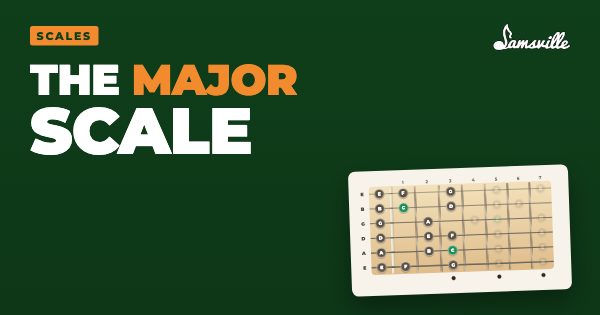
In the learning path Know the Fretboard and Every Key.
About this video
In this stream I'm going to tell you why I really dislike the CAGED system, and what you should work on instead of the CAGED system.
FREE GUIDE - Memorize ALL notes on the guitar in 10 Minutes:
Transcript
YouTube's automatic captions. Tap a time to watch from there.
- all right looks like we are live here on jamsville on YouTube happy Friday everyone today is Friday April 21st and it's 10 14 a.m my apologies for starting a few minutes late I was having some uh bizarre
- technical difficulties which hopefully will not continue throughout the rest of the Stream but anyway so today we are gonna be talking about why I really dislike slash hate the cage system for guitar
- now this is something that a lot of people talk about yeah I've seen so many videos and I've seen some really good videos on the cage system by the way and I know that a lot of people really like it and I know it works for a lot of people but for me uh it just never really worked at
- all I remember when I was a kid trying to learn the cage system and just being so confused by it because I think it kind of over complicates things and if you see after we go through what I'm going to show you in the Stream you're
- gonna see how if you learn the way that I was able to finally learn the fretboard you'll be able to sort of reverse engineer the cage system for yourself and once I learned in this way I was able to actually finally understand how the cage system worked
- but by that point it was just kind of you know didn't really matter anymore right so I see we got some people in here we got one person actually so I don't do a lot a lot of lives on here we got one person so that one person that's watching uh drop drop where you're watching from in the chat so that I'm
- not here all by my little Lonesome streaming showing you guys uh the problem with the cage system all right so and if you have any questions feel free to drop them in there I want to kind of go back and forth between the lesson that I've
- planned out for you all and uh sort of make this like a q a as well and after I'm done going through the material I've prepared for you we will hang out a little bit more um we can talk and just do a little bit of a q a or if no one has any questions then I'll hop right off as soon as we're
- done with the lesson material so anyway Let's uh start jumping into it I guess so first let me just explain to you what the cage system is my understanding of it at least so it's a way for mapping out the
- fretboard that involves five major chord shapes and this would be c a g e and D it's implicit in the name the cage system and these are all open chords that we all learn essentially like right when we start playing the guitar so the C chord
- and these are all right there on this sheet I'm showing on the screen so the C chord and then the a chord and then the G chord and then E chord and the D chord so the logic goes something like this essentially for any major chord you find on the
- fretboard let's say the C chord you can actually find all of the rest of the inversions and places to play those notes that are in that chord by following this pattern c-a-g-e-d so for example if I start with
- that c chord let's actually go to the next page here so if I start with a c chord this might be a little bit confusing to check out and of course this is why you know I don't like it that much that's why I'm doing this stream but I just want to try to explain it to you a little bit so if you see that little box
- on the diagram above this is your C shape of course because that's your open c chord but then if we want to keep mapping out that chord I can shift this box over a little bit and now the box is over what we would call the a shape so if we flip back up here look at that a shape
- okay that a shape looks very very similar to this okay so it looks sort of just like your open a bar chord but now you have to sort of think about it without open strings and I think that's also one thing that's a little bit confusing but that's
- definitely not the most confusing part of this system so then if we want to find the next set of notes that goes into a c chord we would actually take that box and then move it over to the right and now look this is our G shift okay so if you notice these
- notes right here they kind of look like a G chord but again now we have all these notes that would be barred down if we want to play them all at the same time of course they would be bar down on the fifth fret right and the whole point of this by the
- way is not to necessarily like play that chord just like that of course that would be kind of hard but it's again it's just to conceptualize the fretboard and know where you are so I'm just going to kind of blow through this because like I said it is pretty confusing so now move that box over a little bit more and now this is
- your e shape so if you imagine all these notes Here on the a fret those are what would be your open strings in the E shape so check out now that e shape there's your open strings and now this e shape on the only c chord section
- it sort of looked like this actually creates a bar chord so whenever you play like this major bar chord starting from the sixth string that actually is essentially the same thing if you take an E chord and go okay I'm gonna move everything up a fret but now I have to Bar in order to cover what
- was an open string before and then finally move this box over one more time this would be sort of like your D shape so if you see there let's get rid of this box for one second so here these notes that I'm putting little mini boxes over you see that actually looks just like a d chord and
- by the way for that matter if you count the original C shape that we had that also kind of looks like a d chord so while this all sounds really cool and it can be useful here's the problem with it okay if I just give this to someone
- who doesn't understand anything from a hole in the ground about how the fretboard Works doesn't understand any of the notes in any of these chords they're not really going to be able to do a good job memorizing it or at least I wasn't able to when I was at this
- stage in my playing I just couldn't memorize this kind of thing and especially okay great now I did that with one sort of chord like a c chord well now what else do I do with it so now you got to figure out how to play any chord any of the 12 different major chords that exist with
- this sort of cage system and the problem is that you also need to understand where the roots are in any of these chords just to be able to figure out where to put those in relation to the fretboard so you can memorize all the shapes you want but each chord has a
- root in it and once you start actually learning all your chords all over the fretboard you'll realize that the roots not always going to be in the sixth string or even on the fifth string so I find a lot of people they actually know pretty decently the notes that are on the sixth string or the fifth string mainly from Play Bar chords right they
- they understand this but what happens when the root isn't on the six or the fifth string what if the root is on the second string or the third string well now you're gonna have a pretty rough time being able to navigate your way around now of course also people use these shapes to figure out
- their pentatonic scales and so on and so forth look um I just figured out the notes in the pentatonic scale and then and then started learning looking them up across the fretboard so that's what I'm how to do is we're gonna actually figure out some of these cage shapes
- but we're gonna actually figure out how they're constructed okay and that way you're gonna actually be able to memorize them so a C major chord has the notes c e and g in it now if you don't know how to build chords let's just go over
- this really really quickly so first of all you need to know what notes are in the key you're dealing with okay so you should be able to name the notes that are in all 12 keys if you can't do that it's going to be really really hard for you to do this but even you can't do that we can start with the key of C major so the key of C major you should
- know has seven notes in it every single major key and minor key has exactly seven notes in it so those are the notes that we have so we have C D E F G A and B and so those are one two three four five six seven okay so the way that we build the
- chord is all we're going to do is take the first note that we want to build the chord on okay so whenever we build a chord we are building it off of actually one note so we're going to build it off of the C note because we want to build some sort of c chord right
- so once you've figured out the note that you want to build a chord from it's very simple what we're going to do is skip the next notion of scale so now we're going to x out D for a second we're going to take e and then we're going to skip f and now we take G okay let's actually take those X's off because that's going
- to start to get confusing so we're going to skip D go to E and then we're going to skip F and we're gonna go to G okay it's that simple so now we know all the notes that go in a c chord so now if we do the really really
- simple and easy and basic step of actually knowing what notes are on the fretboard now we can just find those notes and we're gonna actually come up with a lot of the same shapes we can also come up with other shapes that's kind of more down the line but we're gonna come up with these same
- shapes but now we're going to actually understand oh that's why these shapes look like this because they could never look another way it's not just a random piece of information memorizing so for those of you who don't know the notes that are on the guitar fretboard uh that's why I put this right here so actually these are all of the natural
- notes that can be found on the guitar fretboard up to the 13th fret okay we're those of you you should know that once we get past the 12th fret we just repeat every single thing that you're gonna find in the guitar is just gonna repeat once you get past the 12th fret so let's just kind of limit ourselves for right
- now to just past the 12th fret because you're going to see some of the shapes are going to go up into the 13th fret so what we're going to do is let's just find this basic C major chord of C E and G let's just find that starting from the
- sixth string so where on the sixth string is their C note oh yeah look right there there's actually a c on the eighth fret so we're going to do this on our fretboard that's below here so let's just drop a c right there and uh this I don't know why this does that let's change that there we go
- we don't want our notes to be super teeny tiny so there's a c there on the sixth string now we have to find each of these different notes on a different string or else we're not going to be able to play them at the same time right so we can actually find c e and G all in the sixth string
- but there's actually a g here there's a z and there's an e open E actually but the problem is that we need to find them on different strings because well we can't play more than one note on the same string at once so let's find where is there an e on the fifth string so there's a there's
- b c d up look there's an e right there on the seventh fret of the fifth string and actually it just so happens look that's kind of close to where this C is right it's pretty easy to play and then finally we need a g note and now we're going to be rocking a rolling
- so let's go to the fourth string to find this G note so there's d e f and then G Bingo there's a g there on the fifth fret so let's drop a G right there now this is our first c chord and actually if we start comparing up here to the our
- little cage system diagram up there we can actually see this is already part of one of those shapes right but now we just figured that out on our oh we figured that out by knowing the notes that were in this chord now the cool thing is guys that because we are playing guitar every single chord that we learn we can
- move it up and down a fret so you don't literally need to know every single one of the notes in every single chord you should but technically you could get away with it what do I mean by that well now we got this shape first of all now we know that with this particular C major chord we know that the root is right here so
- anytime you see a c that's just that's the root and actually over here um all the notes on the fretboard I just highlighted those C's and green so you could remember where the roots are in the key okay so there's the root of the key and there's the root of the chord so if we take that we can actually just
- highlight that let's say uh I wanted to play instead of B major chord and I can just move that all down a half step right so I just want to make sure that root note now it's lined up with B or if I want to make play a G major chord I can move it down so that this node on
- the sixth string is a g so Bingo right there now that's a G major chord gbd same exact shape right but now we understand the reason why that shape looks like that is because that's just where those notes are okay it's for me it's a lot easier to memorize like that
- so now that we've figured out this one chord what we're gonna do is we're going to do something called inversion okay inversion is pretty simple what we're going to do is we're actually going to rearrange and start figuring out where other versions of these notes are so the
- inversion process is super simple we're going to take this C we're actually going to move it up an octave but we have to move it up an octave to where the third string is so somewhere on the third string now let's find a c on the third string oh look there's a c right there
- on the fifth fret of the third string so look let's move this C out there boom and now this is what we're gonna call our first inversion so before we had this chord here we had this c chord this was what we would call Root position so whenever the roots on the
- bottom we call that root position and now this e is on the bottom that we call the third so we call it the third y because look when we built the chord see that e was the number three and then the G is going to be the fifth so you see that g is the number five
- Okay so this is what we call our first inversion so let's just write that down so you all know that so root position equals root on bottom
- okay let's actually let's go ahead and erase this here and then first inversion equals third on bottom okay so
- we're gonna keep doing this I'm just going to go along really quickly here I actually have another video It's called The the right way to learn major Triads go look it up on the channel and I go through this a little bit more slowly a little bit more in depth so essentially we're going to do this inversion again and now here's our second inversion so
- second inversion is when we have the S the fifth on the bottom so let's go ahead and actually let's scroll down here a little bit so second inversion equals fifth
- on bottom Okay so that's our second inversion and then actually if we do it one more time look there's a g there on the first ring on the third fret so look we're going to move that g up an octave Bing Bang Boom we have now a root position I almost
- said first inversion root position so all those chords now combined we get something like this so those are actually all the notes that we worked out so now if we fish through all of our notes there in a fretboard we get this shape here okay so if we compare this to
- our cage system thing that we're looking at it's kind of like a combination of two different caged system shapes so this is where I started having like a really big Revelation like when I played the second inversion chord here that's when even without studying the cage
- system or anything like that that's when I started to realize oh wait a second that kind of looks like an a chord because in the a chord it's the exact same fingering but we do it down there okay so of course we can't play with the open string so sound actually we could do that particular one
- with open strings it actually makes an A minor chord that's a whole different can of worms to get into but anyway so now the only step left is we need to find whoops I don't want to do that we we need to find these same positions starting from the sixth string on
- with the other inversions so instead of having c e g let's actually put those back on there so now we're going to start with the other lowest note that we can find on the sixth string so in the sixth string we can actually find an e here okay on the
- 12th fret so let's go ahead and put an e there and then we can find a g on the fifth string and then we can find a c right here on the 10th fret of the fourth string okay so now you're starting to see that
- we're constructing sort of the cage system from scratch ourselves and this is a super duper important process for you to go through so that you actually understand why those cage system shapes look the way they do if you don't understand why they look the way they do it's going to
- be like 50 times harder to memorize them so now we actually have this first inversion here remember whenever e or the third is on the bottom we call that first inversion okay so now we're going to do the same thing we're gonna essentially just keep adding on so we can actually move this e
- up an octave you see there's an e there if we glance at our chart that's above there's an e there on the third string ninth fret so now that gives us a second inversion and then we're gonna flip this one up G is gonna go to eighth fret of the second
- string and then that's going to give us actually root position so that's a really cool root position chord and then C is going to move up an octave to to the eighth fret of the first fret and now if we fill all those in
- we get this sort of position shape okay okay so let's do one more we're actually now gonna go have an second inversion a second aversion starting from the third
- fret of the sixth string so if we go here we have G and then C and then e you'll see that's actually sort of the bottom of your C shape by the way sometimes people when they play those quote C shape they don't even include that uh sixth string because a lot of
- people don't play the C chord like that you actually hear sometimes like singer songwriters they'll they'll actually throw that chord in there there are sorry they'll throw that note in there that g lower so that it kind of fills out that
- chord a little bit more it's kind of neat having this gigantic c chord like this so now what we're gonna do is we're gonna go through that same process so G moves up an octave action moves to the open string right so let's let's keep that g that was below now actually let's get rid of it for just one second C is going to move up an
- octave it's actually there look check out that green C that's on the second string so now we'll put our C there and then finally e moves up an octave that's also the open string so if we fill out this whole entire thing now all of a sudden look we got all of
- the cage shapes but we actually now understand hey this is not just some random shape that I memorized just because somebody told me to or because whatever any other reason the reason those shapes look like that is because
- that's where the notes are for those chords on the fretboard and there's no other way that they could look any different unless you know we tune the guitar differently that would be the only other way we could sort of change that I guess but with that being said let's move this camera just a little bit so you can see
- that fretboard better so with that being said we can also fill in some other things that sometimes are a little bit confusing when you're talking about the cage system so we know that we also have an E note of course the open string there and then we also have
- you take see this shape right here from our quote C shape well now we can just do everything up an octave so there's an e here and 12th fret there's a c here on the 13th fret of the second string and then there's a g here on the 12th fret of the third string
- so as you can see now we just worked out all of those shapes and that's that's pretty much it we worked them out and now you can see when you go through this process it didn't take that long by the way look we've been here for about 20 minutes
- it didn't take that long it's not like you have to spend you know years and years and years trying to figure this out but now all of a sudden now you know your major Triad shapes and now if you want to figure the rest of the amount you can actually just move
- these up and down so if I start let's say let's delete some of these just to make it a little bit less confusing let's take the first sort of position that we ended up with when we started this whole process here we go so we started with that reposition and then we got all the rest of inversions and we made this giant shape
- so now if I want to I can find a B major chord or let's see we did B before let's do D major so now I know where the root is in this chord so there's actually two routes that we can find there's a root here an eighth fret sixth string and then there's a root
- here in the fifth fret third string so any of those things any of those areas of the shape I can sort of pay attention to and go okay all right I want to make sure I take this shape and line it up so that those root notes are in a d okay well right now I have a C major in that c root note
- is on the eighth fret of the sixth string so where would I find a d root note oh look there's a d wrote no root note on the tenth fret of the sixth string so now I just move the whole thing up and there's my D major chord and actually
- it's it is useful to have like a piece of software like this because now you see the actual notes in the D major chord so all it is is d f sharp a d f sharp a so I would also be able to find these exact same shapes if I
- let's say I'm working on the key of D now so if I'm working on a song that's in the key of D or the key of D is just weak for me and I really really need to know actually all of the Triads they're in the key right this is just the process for one try but we also need to know our minor tribes as well that's one
- thing is that the cage system it's primarily based on major Triads but it's a little more tricky when it starts coming to minor Triads and the thing is if you just know the notes that are in the minor tribes and you don't have to go through a different process it's the exact same process that we're using here
- so the key of D major is gonna have these notes in it it's going to have d e F sharp G a b N C sharp okay so now all of a sudden if I do that
- exact same thing I did before so I'll label each of these notes with a number we started with the first note we skip the second note went to the third note and then we skipped the fourth note went to the fifth note look all of a sudden now we have
- now we just have that exact same chord d f sharp and a so now if I start going through and finding d f sharp a d f sharp and a all over the entire fretboard I'm gonna get actually all these same shapes and again I know that this is not appealing to
- some of you some of you really don't want to go through this process but when you truly understand why these chord shapes or scale shapes or your pentatonic seal whatever it is when you understand why these shapes look like this I'm gonna sound like a broken record
- you're going to understand them a lot better and you're actually going to be able to memorize it with less work in the long term instead of just taking the same shape and going okay I gotta just remember the shape it looks this way I don't really know why it looks this way but I just gotta remember this wacky
- pattern it's not going to work as well or at least it didn't work as well for me I'm sure it works great for some people but uh it doesn't work particularly that well for me let's actually give ourselves a little bit more space here there we go on the iPad so this is what you should do you should
- if you want to you can study the cage system too that's fine but for me once I started going through and doing the following things I was able to sort of by default I already just knew the cage system so let's just go through our practice checklist okay
- so that you can know exactly what to do when you get out of here so one you should memorize hang on one second memorize
- the notes in all keys once you've done that then memorize the chords in all keys
- so each key has seven chords in it you should be able to list all those off right the key of D major has D major E minor F sharp minor G major a major B minor and C sharp diminished you should know that uh the key of E major has E major F sharp minor G sharp minor
- a major B major C sharp minor D sharp diminished you should be able to Rattle that off with no problem actually the cool thing is that this is something that you can practice anywhere you can practice you don't need a guitar you can practice it while you're waiting in line to the grocery store so once you've done that then
- find all chords in all inversions across the fretboard so yeah it's not quite as simple as you
- know just here's this magical shape take this magical shape and then you're going to be amazing at Guitar sorry I you know I wish that worked like that but if you do those three things you're gonna see that essentially you're not going to need the cage system anymore you're just going to
- be able to actually know where these things are in the fretboard and that's going to be the end of that then you'll start noticing oh yeah this kind of looks like a c chord or oh this kind of looks like an a chord or all this kind of looks like a d chord you're gonna start to notice that but after the fact after you actually just figured it out
- for yourself so with that being said uh just for today's stream if you want me to guide you step by step and then it takes a little bit longer than just this uh 30 minute long stream here but if you want me to guide you step by step through how to figure out
- playing in every single key playing every single chord that you need to know across the entire fretboard then you should go ahead and check out the Jamesville GPS fretboard fundamentals course so just for this stream I'm running 50 off sale so if you go to
- jamsville.com live it'll automatically apply the 50 discount to you and so you're gonna learn how to master the fretboard you're going to learn how to play in any key that you need to any minor key any major key you're going to completely get
- all the stuff down and completely out of the way so for the rest of your life you're never gonna have to depend on some kind of weird shortcut that's confusing you're going to know exactly what you're playing and why you're playing it and that is one of the most valuable things that you could possibly develop in your guitar playing
- um also it comes with a whole book that gives you every single thing written out for you okay so I'm going to show you how to figure all this stuff out yourself but it's also going to if you need it I actually explained in the book that sort of the whole point is you want
- to try not to use the book so I'm of a very very strong opinion that if you can figure these things out without using a visual aid it's a lot better because the whole point of using a book or any sort of sheet of music or anything like that is just to basically teach it to you but
- none of this stuff is even remotely useful if we don't actually have it memorized and at our fingertips for when we need to use it in our plan it's not going to work you're not going to be able to go hey uh I want you to take a solo on this song and or somebody's gonna ask you to
- take a soul in a song and then you go okay uh let me pull out my uh my scale book or something no it doesn't work like that these scale books and charts and all that stuff they're great if you don't know at first but as soon as possible we need to we need to get rid of that we need to
- get all this stuff in our head and that's exactly what I show you how to do in the Jamesville GPS fretboard fundamentals course also if you want to take a personalized lesson where I can show you exactly what you need to work on you're playing we could come up with a custom game plan for you completely
- free actually just go to jamesville.com there's a big button right there that says booking a lesson with me you just go in there you click the button and then it's going to take you to the calendar and all you do is just put in a Time find a time that works for you you put in your email put in a couple other
- pieces of information and then automatically you're going to be booked in with me and we will be able to have a really really fun chat where we're going to be able to go over all the stuff that you want to do in your playing and come up with a game plan that's going to work for you so if that's something you're interested in also make sure you go to jamsville.com find that big button that
- says book in a lesson with me uh let's go back to the chat here see we got we got one person watching I have to do more of these streams because uh man how is it possible to have 8 000 something subscribers and then hop on a
- stream and there's like nobody on here that's because uh that's because all these subscribers actually a lot of you guys are coming from the shorts you know I'm I'm starting to get mixed feelings on the shorts I don't know uh if any of you watching found out about me from shorts let me know because uh shorts are cool
- they can teach you something pretty quickly which is nice we love we all like to save time but there's not really any connection to be made there you know and and I notice it's it's almost kind of like this vanity thing um I almost don't even want to make the shorts anymore even if it you get a hundred thousand subscribers or
- something like gonna get a hundred thousand subscribers and then still get like 50 views on a video or or you know 200 views or something like that it's just the it's kind of silly so whoever's watching right now drop in the chat where you're watching from or drop number one or just type something
- because Mash on your keyboard and then press enter right write something in the chat because they're kind of uh trying to keep this going all here by myself um and if nobody else writes anything in the chat I think I'm going to have to get off of here because we've kind of
- gone over everything everything that I want to talk about in this video I wanted to show you how it's like this cage system it's just like memorizing ah there we go uh Brian what's going on man thank you thank you for uh thank you for stopping by well hey man uh
- we uh we kind of got through a lot of the stuff already but um you know if people are coming on I definitely want to hang out if you have any questions man that you want me to answer now's your time because doing these live streams in here is is pretty rare pretty rare for me um I'm gonna try to start doing them a
- little bit more because I think it's just fun uh it's something that's that's a little bit uh nerve-wracking at first but uh but uh coming on here I mean if there's not that many people watching I guess it also doesn't really matter but uh that's cool man you're in Manteca California awesome
- uh for those who don't know by the way I'm in Dallas Texas so I'm a little bit a little bit ahead of you it looks like I guess you're probably about two hours behind um behind where I'm at but if you have any questions what style of music do you play Brian tell me
- see thank you shut up been looking into the cage system nice yeah man um a lot of people look into the cage system you know and uh if you go back and uh go back and start checking out if you
- watch the replay I talked about how I started checking out the cage system when when I was a kid actually I'm 29 right now and I started probably checking out when I was like 10 or 11. and it was just so it was very very confusing because let's go back over here actually because you're on here you
- know what uh this is uh this is what I want to show you so uh yeah we'll we'll go back and and you can check this out on the on the stream but or in the on the replay rather but basically the whole point that I was trying to make was that with the cage system you kind of just have someone tell you
- okay well you gotta memorize the C shape the a shape the G shape the E shape and the D shape right and then you gotta memorize taking these shapes and sort of spreading them out all over the fretboard and while I'm sure that it works for some people maybe it's maybe it's worked for you let me know if it's uh let me know if it's work have worked
- for you I know that there's a lot of people who really stand by it and you know with when it comes to learning everyone has different styles of learning and I totally respect that um but for me I need to understand why a piece of information exists right so that's sort of the message that I
- preach on this channel is okay if you want to learn a chord or scale just learn the notes that are in that scale like everyone else does that plays like any other instrument or learn the notes that are in that chord and find it okay find them all over the fretboard so
- that's what we were kind of doing we were actually working out these cage shapes by finding out hey okay a c chord has the note c e and g in it and then Bingo we found those notes c e and G across the fretboard so that's why we got this um
- these are all the natural notes across the fretboard um if you want to check out if you don't know the notes across the fretboard check out my video um the best way to learn the notes on the fretboard or memorize the fretboard I think it's called something like that um where I go into really detail where you can actually understand like I'm
- sort of saying here he actually understand why those notes are where they are as well so it's really important to do that uh there's a couple of ways that people learn the fretboard that I'm also not super uh not a big fan of like for example let me show you this one uh you
- might have tried something like this like people will say okay uh practice picking one note and then finding it all over the fretboard so let's say F so I'm gonna go okay there's an F there and there's an F here and there's an F here and there's an F here and there's an F here and there's an F here and there's an F here there's an F here and then
- okay well I gotta play through all these F notes so I can actually do that but it's not a it it's not because I actually practice doing that funny enough so again I want to personally
- know I want to know why is that F there don't just tell me that f is there um why is that effner well f is always going to be next to e and it's also going to be next to G why is it going to be next to e and G well because e and G are the previous and
- next notes in the alphabet right so it really really helps if you have the context of where this information comes from to memorize it I was never ever able to do any of those node exercises like I just showed you um because then all I'm doing is thinking
- of f all right well I mean I'm never gonna actually play that by the way I mean maybe it'd be cool to actually like shoehorn that into a solo or something but uh you're not really going to do that in in any kind of practical situation but if you learn actually just
- all the natural notes on the fretboard you're actually practicing a lot of different things at once number one all the natural notes on the fretboard are actually the key of C so anytime you play a song in the key of C uh no I just messed it up for a second
- thinking a lot of things at the same time so anytime you play some kind of chord progression in the key of C now all of a sudden I'm good on the notes in the key of C of course and then you're also memorizing the major scale patterns that you need to learn because anytime you move
- any of those notes like if I take one of my C major scale patterns and then move them all up two Frets well now I got D major so you're learning a lot of different things if you sort of cover all those notes all at once um also I highly recommend when you
- practice to try to improvise so that's what this channel is really really big on is like how to improvise better so the best way I think in the most simple and straightforward way is just throw on a drum track so kind of like this I'll throw in this little drum track and may pick one
- string and go okay uh most people are pretty weak on let's say the second string so I go okay I'm gonna improvise only in the second string using only those natural notes [49:27] do do right something like that where it's impossible for me to go through that process of improvising without also kind of memorizing where those notes are right also particularly on one string at a time it's it's a little bit trickier to
- just memorize some kind of pattern of dots right a lot of the patterns of dots that we see are like the position patterns you might know those position patterns uh I'm gonna have to do a video on position patterns actually I'm so sort of
- um Jaded by the getting stuck in the box of the position patterns I haven't really covered it but it is important to know your position patterns as well I will definitely uh admit that you got to know both you got to know whatever key you're playing in you have to know it on one string at a time and then you also have to know those position patterns for
- sure because that's sort of the the ideal place you want to be is have everything at your disposal if you're just stuck playing a one string at a time that's also not great and if you're stuck playing in a position pattern well that's also going to hurt you that's a situation that most people find them in find themselves in rather
- um so yeah definitely make sure they get those down in the key of C and then actually understanding what notes are in the other keys that you want to play in will reveal the patterns to you so that's my big message to all of you uh Brian and and everyone else
- um yes intervals definitely intervals are super duper important too 100 you want to understand when you're playing in the QFC hey C is one t is two e's three f is Four G's five a six B is seven because then when you are in a different key then you start just thinking about okay one two three four
- five six seven that helps you memorize the shapes too for sure so um think think what I'm gonna head off of here it's starting to get uh starting to get pretty close to lunch time over here in Texas um thanks so much for hopping on Bryant uh Brian sorry is it Brian I have a
- student named Bryant actually maybe that's why why I said that but we will unless anybody has any other questions looks like well we had three people watching at one point that's pretty good I'm pretty happy with that um but anyway I think that's going we're gonna wrap it up so just remember if you
- want me to take you step by step on all this uh go to jamsville.com live and you can get my course the massive fretboard Jamesville GPS fretboard fundamentals course for 50 off or if you want to book in a free Zoom lesson with me
- then go ahead and go to jansville.com and right there you just go to a calendar and you'll be able to you'll be able to book in a free lesson with me there's there's not much else to say completely no risk whatsoever uh we'll just sit down and have a chat like this but I can actually uh see you
- and see you playing and give you actual feedback yeah that's good that's the one thing YouTube YouTube can't really do YouTube can't give you feedback can't listen to you playing so anyway cool I've been focusing on the major scale lately so you're talking about where I live today my music awesome awesome yeah it's super
- important man super important also don't forget rhythm Brian that's why I was showing you the improvising with the drum track don't forget to whenever you're learning any of this stuff rhythm's always more important you can play all the perfect notes and know every single note in the whole
- entire guitar fretboard and if you don't play with good Rhythm uh it's not going to sound good so the way that you get there faster is just by not separating those two things don't just sit there and do like node exercises but as soon as you can you know I'll write in the beginning if you don't know any of the
- stuff that you can't I can't just throw on a drum track and have you do it but um as soon as you can throw on some drums or throw on a metronome and uh make sure that you're practicing any of this stuff in time it'll make you way uh way better at actually applying
- it to actual music and then improvising with it too oh any New Concept I learn I make sure it improvise with it if it's a chord you know if I'm learning my chord inversions uh let me switch camera angles of lighting my chord inversions like even something simple like something like this you know I'll throw
- on a drum track and then or if it's two chords or C and A G chord [55:13] right so now I'm actually making music with it right you're not making music with it if you're just uh sitting there you know just going no that's that's that's a music that's
- you know that's something else but that but that's not music music's gotta have some kind of Rhythm to it um at least most of the time you can play Roboto and you know there's always exceptions to everything you actually this song it doesn't have any time to it yeah well people like to dance to Rhythm
- so you know 99 of really good music's gonna have good Rhythm to it also all right I'm out of here smash the like button hit the like button I forgot I forgot to tell you all that hit the like button every one of us says hit the like button it really helps out and uh yeah I'm out I'm gonna have some lunch hope you all have a great rest of your day
- and I will see you in next week's video and we'll see if uh if you all comment comment yes below if you want me to do another live stream and if you don't want me to do a live stream if you think that this was the worst thing ever and you think I'm a complete idiot and you think I suck at guitar and you don't like me you think
- I'm ugly then then comment no below okay but if you want me to do another live stream and uh and you liked it then comment yes in the chat or in the comments Below in the replay all right everybody I'm out of here until next time listen learn and jam