
After each pass the video waits as long as the loop, so you can play it back.
Start slower with −, and it climbs to 100%.
Keys: Space play · ← → 5 s · [ ] set start and end · − = speed · L loop
Soloing · Intermediate
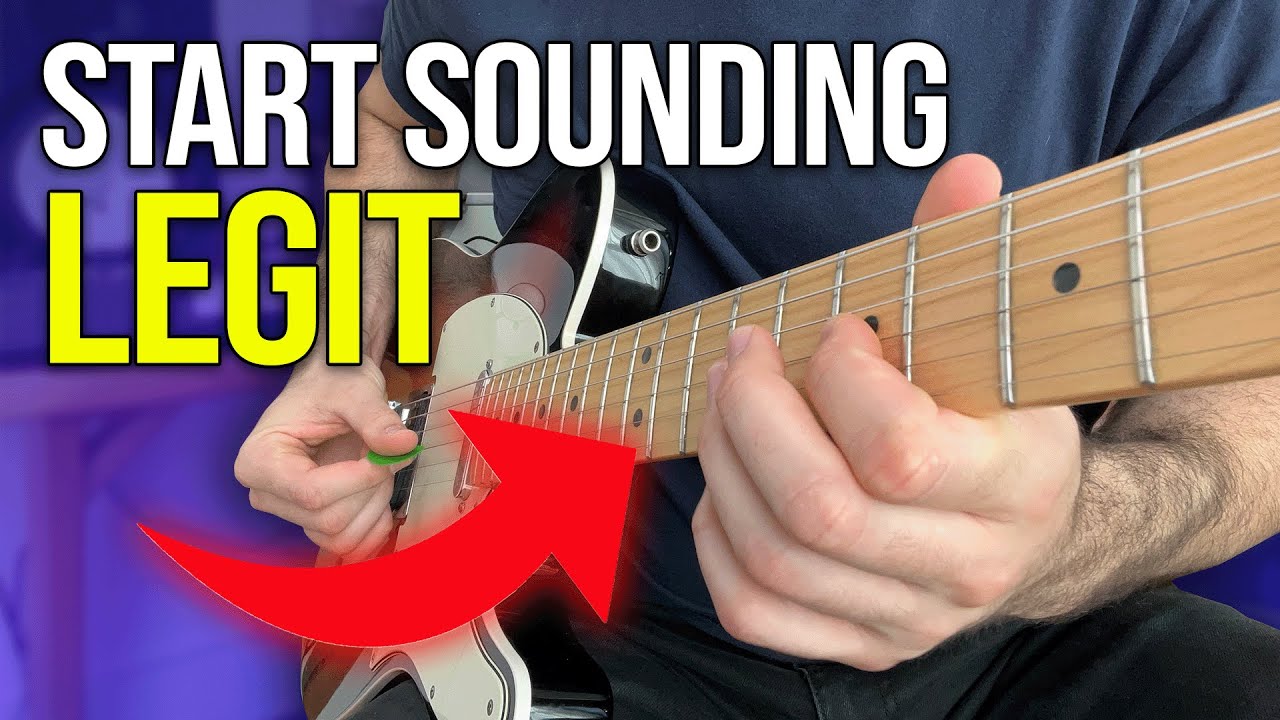
The 3 MAIN Blues Guitar Soloing Approaches!
In this lesson
Tap a time to watch that part. loops it, so you can slow it down and play along.
-
Key idea Blues approach 1: minor pentatonic / blues scale over everything
The first approach everyone is taught for a blues is the minor pentatonic box (plus the blues scale's flat 5) over the whole progression; it works, but used alone it starts to sound boring and unlike other blues players.
-
-
On the neck Morph minor pentatonic into major pentatonic in the same box
Derive the major pentatonic from the minor pentatonic box you already know so you see how the approaches relate and can blend them seamlessly.
-
Key idea Major pentatonic on the I chord, not the IV
In a major blues, major pentatonic sounds great on the I chord, but its 3rd (D natural in Bb) clashes on the IV chord (Eb7, which contains Db); you have to process which chord you're on.
-
Demo Bend F up to G over the I chord
Bending the 4 up a whole step to the 5 (F to G in Bb) inside the minor box gives a bluesy-but-major sound heard in Jimmy Page's solos; missing it came from only ever using minor pentatonic.
-
-
Key idea Triads glue the approaches together
The third approach, triads/chord tones of each chord, guarantees good-sounding notes on each chord and stops you sounding like you are running a scale.
-
Key idea Dominant 7 mixes major and minor worlds
The I7 chord contains notes from major pentatonic (the 3rd) and from minor pentatonic (the b7), which is why the dominant I chord sounds bluesy and why both scales can be blended.
-
Demo Slide into triad notes to make them bluesy
Plain triad notes can sound not bluesy enough; sliding into them from a neighbor adds outside notes and the blues flavour.
-
-
On the neck Find the V7 arpeggio inside the same box
Instead of moving shapes, find the V chord's arpeggio in the same pentatonic area by adjusting neighbouring notes, visualizing minor pentatonic, major pentatonic and the arpeggio together.
-
Exercise Bend into chord tones
Most players can do the one or two stock minor-pentatonic bends but not bend into the chord tones available; practice bending from a note below a chord tone, mixing major and minor bends.
-
-
Demo Percussive raking with full muting
Learn to mute all the strings below the note so you can rake across them percussively, then combine raking with bends and slides.
-
Fix Slide when bends are hard
If bending is still hard, use lots of slides (combined with raking) to get the vocal blues sound.
-
Key idea Articulation, rhythm and phrasing matter more than notes
Even after a lesson about notes: articulation, rhythm and phrasing are more important than note choice; wailing on pentatonic with great articulation beats perfect notes with boring, predictable phrasing.
-
Practice it
- Guide Chord Tones: How to Solo Over Chord ChangesFor “Find the V7 arpeggio inside the same box”. Solo over two chords and hear the changes in your lines, by landing on a chord tone each time the chord changes. Then take the same idea to a ii-V-I. Read it
Transcript
YouTube's automatic captions. Tap a time to watch from there.
- so in today's lesson we're going to be taking a look at the three main approaches to soloing on a blues that I feel every guitar player needs to know to feel the most freedom and just sort of completeness When approaching soloing on a blues so without further Ado let's jump right into it so the first main
- approach that everyone knows for playing over a blues is going to be the minor pentatonic scale slash the blue scale so if you look on the fretboard diagram that we got on screen there most of you will recognize that as your minor pentatonic box pattern that everyone knows so we're playing in the key of B
- flat here we're playing a B flat blues progression and we'll go over how that progression works because some of you may not know how the blues sequence works so that we can uh understand this a little bit better so that's what what everyone gets taught number one is just play minor pentatonic over the whole
- thing all of those notes work over the blues progression and then the blues scale I kind of group that with the minor pentatonic scale because it's a very slight variation of the minor pentatonic scale we add this note right here this e note here on in this case the ninth fret of the third string and
- then you can also add an eote not over here on the seventh fret of the fifth string so if you add those notes in now that particular e note which is the flat five sounds very bluy now some of you who have played
- with this approach a lot might have think okay that's great but then my playing starts sounding boring and it doesn't really quite sound the same way a lot of other blues players that I hear sound so in that case whenever we're playing over a major Blues which in this
- case we are playing over a major Blues a lot of different Blues progressions are major but you also have minor blues progressions so if you're playing over a major Blues the sort of next level up to start thinking about is not just using the minor pentatonic scale which by the way if we're looking at this from a
- purely theoretical perspective the minor pentatonic scale should not work over a major chord or major Blues we're not going to get into that right now it just sounds cool okay but the next approach we can take is using the major pentatonic now the major pentatonic is
- uh like the minor pentatonic except it's major now let's go down here for a second so we can look at the different notes that that are in these different scales so in the minor pentatonic scale you have B flat d flat E flat and then I put in parentheses there the E because that's like our blues note that I mentioned from the blue scale but if we
- didn't have that note then we just go to F and then a flat and that gives you if you see there the numbers in red the one the flat three the four the flat five that's that blueo the five and then the flat 7even so really the minor pentatonic scale is just one flat 3 4 5 flat 7 right but B flat major pentatonic
- would also have five notes but some different notes so instead of B flat d flat E flat F A flat we have B flat c d f and g and if you look at the numbers that underneath that it gives us different intervals first of all there's the B flat which is obviously the root
- the one but then we get C which is the major second so let's actually kind of morph this um this major pentaton scale from our minor pentaton scale we started off with which I think is very important for you all to understand when you're uh
- learning these things you have to see how these approaches relate to each other so that we can blend them together seamlessly so if we drop this note this note now all of a sudden we actually have a bflat major pentatonic scale right here so now all of a sudden you
- see we had that other box before but now we have the notes that are outline below B flat c d f and g so that gives us the one the major second the major third the major Sixth and then also the fifth I almost said major fifth that's not
- correct terminology so the one the three the five and the six so now if I play over this Blues progression I can use that over the progression and I'm going to talk for a second about that after I play this because you don't really want to use this over the whole entire chord progression it depends on what cord
- we're on but when we're on the one chord we can use that major pentatonic there it was on the four chord you hear that D that D natural doesn't sound that great on the four chord look we're going to the four chord right now look D natural doesn't really sound good
- on that four chord so we're going to talk about that a little bit more in a second but when we're on the one chord it's a really really cool sound to use that major pentatonic and we're going to talk a little bit more about phrasing and articulation later but one of my favorite things to do is to also like bend that F you see there on the second
- string bending it up to G so from F to G you can hear that kind of bluy but at the same time major sound so it sounds bluesy but it doesn't sound the same as our typical minor pentatonic
- scale this is the band I was talking about so that's a kind of bend that I would hear also like Jimmy pige do a lot in his solos and be like wait why why do I never get that sound in my solos well it's because all I was doing is using major sorry using minor pentatonic the
- whole entire time and I never used any major pentatonic so we're going to talk a little bit more about that in a second because I told you that sometimes some of the notes don't work that well over some of the different chords so with that being said we have our minor pentatonic that's the first approach our
- major pentatonic that's our second approach and then our third approach which to me it glues all this stuff together and if we can understand this then we know for a fact that we're always going to be playing notes that sound good on each of the different chords in the Blues
- is that's my weird um vocal version of a drum roll boom Triads right there Triads are the thing that we really really really need to know if we want to make sure that we're really able to play cool
- stuff on the blues and not start to kind of sound stale or like we're just running the same scale over and over of course those of you who know what Triads are you know that they're not scales so if you're playing Triads you can't sound like you're running a scale because you ain't playing a scale you can't sound like you're running scales if you're not
- playing scales so we're going to be talking about Triads here for a second so now let's actually while we're on that subject let's talk about the actual chord progression for the blues and I'm going to actually delete all of these notes Here so that you can uh just
- simplify things here so first of all the first chord in the Blues in this particular case we're in the key of B flat but it still doesn't matter it's a dominant seven chord and we treat the dominant seven chord is the one chord now that's something if you've seen my other videos just talking about regular major scale Theory that's the thing that
- like in the blues that totally like quote unquote Breaks the Rules is a dominant cord is not really supposed to be a one chord but cuz it sounds cool we go well what if we just do that cuz it kind of sounds cool it sounds bluesy so let's look at the notes that are in a B flat 7 chord so the first
- chord if you go up here is B flat 7 so let's look at the notes there in a B flat 7 chord it's actually B flat GF so those are just the Triad notes those are going to be the most important notes out of all the notes in the chord but if we're looking at the seventh chord too we're going to add the seventh
- then we would also have the note a flat and as you can see a flat is actually part of the minor pentatonic scale so that's the kind of weird thing about this guys is that the chord itself that we're playing over has three notes that are from major pentatonic it has D
- natural and it has f F right B flat DF but then it has this a flat which that comes from the minor pentatonic scale now that's one of the reasons too that it sounds so cool to have the Dominic cord on the blues like that because it's mixing these two worlds of major and
- minor okay let's it's like a major cord but it's got this little minor element that flat 7even that a flat so first of all if I'm playing over that one chord in the Blues I got to know where that Triad is and ideally also that seventh chord so that I can play something like [10:39] this I'm just going to skip over that it's the four chord and then you can slide into those Triad notes so that's one thing that automatically sounds bluesy too like sometimes I feel like when I play Triads if I just do this that doesn't sound bluy enough but then
- all of a sudden if you slide into them that's adding a couple notes that are outside of the major uh of that Triad or that seventh chord that was adding a note from actually the major pentatonic scale but that's where all this is going guys is that we want to actually be able to fluidly combine all
- these approaches the major pentatonic minor pentatonic and then also the Triads from the quarts so let's go up here so just in the first four bars you go from B flat dominant 7 to then E flat dominant 7 so if we find those notes on
- the guitar E flat dominant 7 would actually be over here because it has scroll down E flat G B flat that's our Triad note so those of you know your major Triads you recognize that's a major Triad but then you also have that d flat there that's that flat 7even and if we compare
- it to our two scales that we use major pentatonic minor pentatonic oh wait a second look same thing there's kind of a blend of stuff going in here there's E flat E Flat's only found in the minor penet talk scale there's G that one comes from the major penet talk scale there's B flat that one's obviously found in both and then there's d flat
- that one is found in the minor anatonic scale so that's why going back if you remember earlier in the lesson I didn't want to play D natural when we got to the four chord that E flat chord because it doesn't doesn't fit with the chord the chord has a d flat in it has that
- flat seven which comes from the minor pentatonic scale but if I play like a d natural next to that it's like it clashes a lot so that's why you have to be able to like process what cords you're on so
- that it can also inform what scale you want to play if you want to play either that major pentatonic or that minor pentatonic so I'll give you a shortcut right now play B flat minor pentatonic when you're on the four chord and then you can play either minor pentatonic or major pentatonic when you're on the one
- chord but once you're in the four chord don't be hitting that D natural or be hitting that third from the major pentatonic scale now what I will say is that you can again this is why you got to know the Triads because you need to know these cords in and of themselves there is a note from the major pentatonic scale that works super well
- and that's the G cuz it's in the cord right so that's why a good like balanced approach to this is required sort of blending all these things together okay so now that already Gets You Through the first eight bars of the the blues progression it gets you all the way over
- here so the only other chord in the whole progression is going to be F7 okay F7 so for the sake of this let's actually find the notes in F7 in this position so first of all I know that I could just actually take all these notes and I could just move them up a whole step like that and that's going to give
- me my F7 chord because it's a dominant seven chord a whole step away but if we check this out so first of all actually one thing I do like to do is Bend actually this G up to a which is in the F dominant 7 chord so let's actually do that for one second and then we're going to figure them out in the same position
- so if you like leave the other notes that were there I like to bend from this G up to a when we're on the five chord so if I have F7 cuz that's bending into the third of the F7 chord or you could also bend a flat up to a so you're bending like
- what's normally in the minor pentatonic scale and then you can play sort of your minor pentatonic stuff over it over the five chord you have a lot of flexibility because the five cord's job is to create tension but anyway let's go back here so let's actually go back to like our uh
- major and minor pentatonic areas let's just keep it simple over here so if I'm looking at this this whole box I can find the notes f a c and e flat really easily so there's an A in between this a flat and this B flat so let's go there
- let's get rid of the B flat for a second even though you can kind of play that B flat on there and then now d goes down a whole step to see and now all a sudden look check this out I can also move this here and uh let's get rid of that one and then right here so all of a sudden now here is my F7 arpeggio that I have
- in this area so again you have to try to visualize that minor pentatonic that we had and then also the major pentatonic and then this F7 arpeggio but so one thing I love to do a
- little lick is to like go up into this a here and play this F over here these two notes right there and those two strings they sound super good together like and then when you go to the four chord afterwards in the progression you can just move that actually both down a
- whole step so let's uh try hearing what that sounds like we're going to play over the five chord and uh see if we can highlight those notes right
- there there's that lick that I just showed you in the four chord and there was that bend that I showed you earlier bending G up to a which is Al the same thing as this a
- that you see there on the first string as well so this is why we need to know all of these things if we know the Triads and we know those two main scales the minor pentatonic and A major pentatonic that gives us a lot of different stuff to work with and then
- what we want to do is to make sure that articulation is good so let's do a little bit on Blue's articulation so first of all any of these approaches we want to try bending through them so bending from one note to the next and especially when we're look looking at
- the Triads bending into the Triad notes so let's see what it sounds like I'm going to bend into some different notes and I'm going to try to call out what I'm thinking about which approach so this is minor [18:49] penaton now I just bent into D natural on that one chord so lots of bending there I bent that was like a major Bend I bend up to [19:17] D there you go I hit that F7 arpeggio there I was bending into the the E flat 7 arpeggio so that's where you get this really cool bluesy sound is if you start learning to bend into these
- notes that are not in the minor pentatonic scale most people are really good at just doing this one bend on the minor pentonic scale and maybe this one that first one that I did but most people don't to know how to start bending into the different
- chord tones that are available so make sure you practice bending from a note below one of those chord tones and seeing if you can start getting some more interesting stuff you get those major bends in there you get those minor bends in there and get a healthy mix that's what like really really to me
- started helping me sound a little bit more legit when I was playing Blues so now another thing that we can do that I really really love is this idea of like percussive raking on the guitar so let's say let's just go back to our good old minor pentatonic scale let's say I want to play any of these notes I should
- learn how to mute all the strings below so I can go like this so it's a combination of two things and number one it's a combination of the left hand and it's a combination of the right hand so the left hand sometimes like to use this thumb here and it's not
- because I'm just grabbing on the guitar like a baseball bat it's because I'm actually using it to cover those strings so there's that and then for example if I'm using this finger to play a note on the third string I'll use this finger to touch the fourth string the string that's directly below SL o however way
- you want to think of it it is a lower sounding string so I consider it below but every single extra finger that you have available muting strings and then finally the right hand using the side of the hand right here to place on the strings as well and then we can combine that
- approach with the bending so I can use that sort of rake idea [22:15] right you can use all of these different things in combination that's the whole thing that I want you to get out of this video okay and then finally the last really important articulation thing we need to talk about is sliding so learning in a Bend like that is definitely not easy and I'm not the best in the world at it so you go ahead and
- let me leave me a comment or whatever I'm sure you know I always get some kind of negative comment by the way if you leave negative comments dude it helps me out so please leave me negative comments um but yeah I'm no like Joe bamasa or whatever but yeah bending is hard it takes a lot of practice for sure like it
- getting used to the bending motion enough to be super free with that now if you are having trouble with bending well you can just do a lot of sliding and then sliding combind with that raking it just sounds so
- good and even if you get some of these bigger slides like for example right there I was just sliding from the F to a flat on the sixth fret of the second string sliding up three Frets these kinds of things even though I know we talked a lot about notes guys
- in this video these things are probably more important they no not probably they are more important than the notes they play you can just whale on pentatonic scale and if you have really good articulation and Rhythm and phrasing that's going to sound better than someone using all the perfect notes but their articulation is super boring and
- their phrasing is super predictable and all that kind of stuff so with that being said uh let's jam out a little bit on this Blues progression one last time before we wrap this video [24:26] up [24:52] a [25:26] d so if you were confused by any of the stuff that I talked about in this lesson whether it's building chords building the Triads or the different scales I
- talked about and how to find them on a guitar fretboard and you're interested in learning how to not only do these things that I talked about in this video but be able to find all your Triads be able to master the guitar fretboard no matter what key it's in and no matter where on the fretboard you are and I will walk you step by step the process
- of being able to figure out all of these things everywhere on the guitar fretboard then make sure you head on over to jamille. comom right now and get yourself a copy of the Jamesville GPS fretboard fundamentals course if you're fuzzy on any of this stuff the course is going to be one of the best things that
- you've ever gotten to help your fretboard knowledge to get it to Total Mastery also make sure you check out the Precision pick from Dan's guitar store this is not sponsored by them they're just my absolute favorite picks that I have ever come across because they have unbelievable grip and the tip with the
- beveled Edge is so precise and accurate for playing all the stuff that I want to be able to play so make sure you check the link in the description below and uh get yourself some Precision picks from Dan's guitar store and lastly make sure you check out the Jamesville merch store
- for awesome Jamesville t-shirts hats sweaters coffee mugs I got all the Jamesville stuff and I'm using it looks freaking awesome dude I love this shirt not only does it look cool but it fits super well and the fabric is really really soft and com it's one of the most comfortable shirts that I've ever worn
- and I was so pleasantly surprised when I realized how good these shirts were so I'm super happy with them and I'm sure you're going to love representing your Jamesville Community out and about with your Jamesville merch and until next time make sure you subscribe hit that
- Bell notification button hit the like button do all the stuff just do all the stuff so until next time listen learn and jam