
After each pass the video waits as long as the loop, so you can play it back.
Start slower with −, and it climbs to 100%.
Keys: Space play · ← → 5 s · [ ] set start and end · − = speed · L loop
Chords and harmony · Intermediate
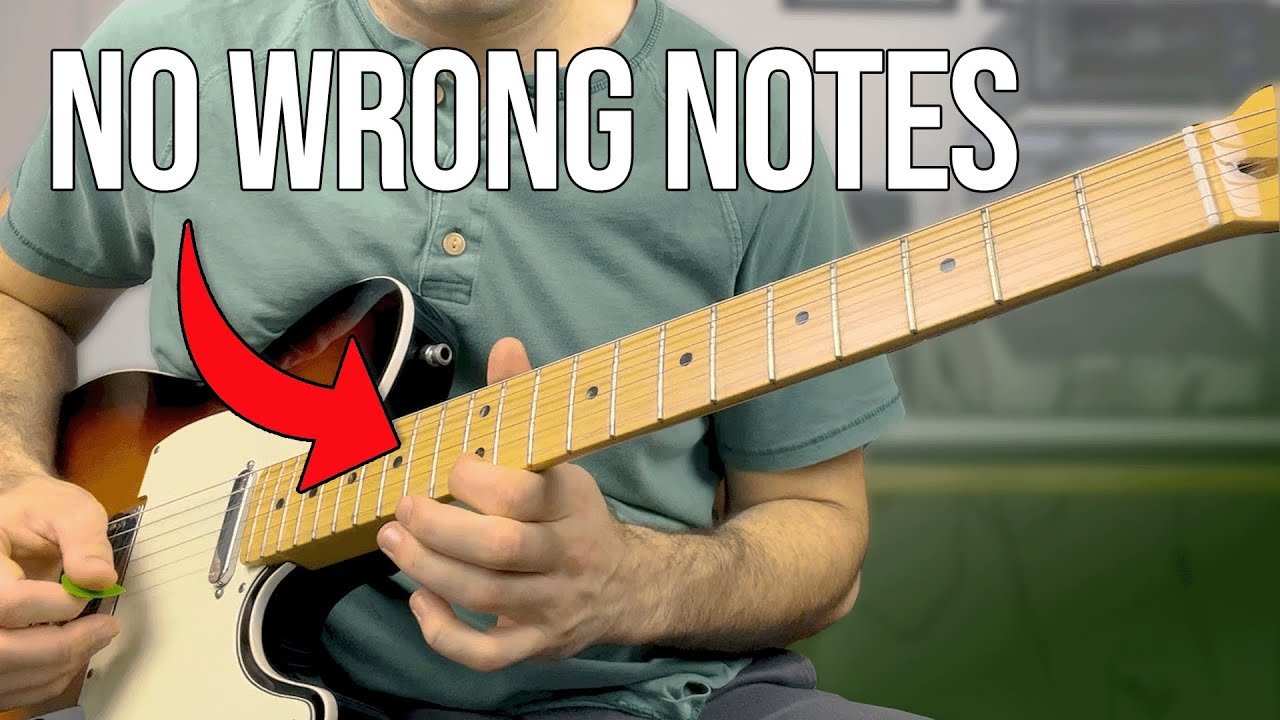
How To Play CONFIDENT Solos on Guitar (Over ANY Chords)
In this lesson
Tap a time to watch that part. loops it, so you can slow it down and play along.
-
Exercise Step 2: voice-led lines from chord tones only
Find the strongest melody lines connecting the chords: keep common tones, move every other note as little as possible to the nearest chord tone of the next chord. Play simple lines using only chord tones, perfectly voice-led.
-
Key idea Notes are lazy
Notes do not want to run a marathon to the next chord; they want to move by half or whole step or not at all, which makes strong melodies that outline the changes.
-
Key idea Theory is how you play with feel
Simple, slow, voice-led chord-tone lines are the strongest melodies; using theory this way is how you play with feel, not the opposite of it.
-
-
Exercise Step 4: just play; the only rule is land a chord tone on the downbeat
Forget everything except one rule: land on a chord tone on the downbeat when the chord switches (leaps allowed); end phrases on chord tones.
-
Key idea Learn the rules, then break them
Weird notes are not the problem; landing on one without knowing how it will sound is. Always landing on a chord tone eventually sounds boring, but you need the control first; practiced enough, it happens without thinking.
-
Practice it
- The C chord's tones (C, E, G) inside the C major scale, with the rest of the key still showing.From the guide: Chord Tones: How to Solo Over Chord Changes Open in Jamsville
- The G chord's tones (G, B, D) in the same part of the neck.From the guide: Chord Tones: How to Solo Over Chord Changes Open in Jamsville
- Step 4: the 7th. B over Cmaj7, F over G7.From the guide: Chord Tones: How to Solo Over Chord Changes Open in Jamsville
- Step 5: the 3rd or the 7th.From the guide: Chord Tones: How to Solo Over Chord Changes Open in Jamsville
- Step 6: the 5th or the 7th.From the guide: Chord Tones: How to Solo Over Chord Changes Open in Jamsville
- Step 7: the 3rd, the 5th or the 7th.From the guide: Chord Tones: How to Solo Over Chord Changes Open in Jamsville
- The whole C major scale, then C; the scale, then G; the scale, then Am; the scale, then F.From the guide: Chord Tones: How to Solo Over Chord Changes Open in Jamsville
- Drill Land on a chord tone ProFor “In the key but weird notes”. You'll land on the note that spells each chord, right on the change. Open
- Drill Arpeggios through the key ProFor “Step 1: learn and play the arpeggios through the changes”. You'll see every chord of the key hiding inside the one position you know. Open
The guide
In the learning paths Start Soloing From Zero, Solo Over Chord Changes and Solo Over the Blues.
About this video
Download 10 ESSENTIAL Improvisation Patterns:
Transcript
YouTube's automatic captions. Tap a time to watch from there.
- have you ever tried to solo on a chord progression you figure out what scale is supposed to work over the chord progression you think yay i can play whatever i want and whatever notes i want from this scale but then you start soloing and go what the heck i'm playing some notes that still sound weird what is going on
- with this i can't figure out what's going on in this video i'm going to answer that question and i'm gonna show you how to fix it so you can solo confidently on literally any chord progression that you ever learn in any song so without further ado let's get started so the solution to this problem
- of playing properly in the key but still hitting these weird sounding notes is something that i call the target note method and a lot of other people also call it the target note method basically the gist of it is that in any chord progression you need to know the notes to the arpeggios that are in each
- of the chords in the progression and target those notes every single time you switch to those chords the reason for this is that we know for a fact out of all the notes that are in the key that we're playing in that the notes that are contained within the chord you're playing on are going to sound good because well they're part of the chord that you're
- playing on they can't possibly sound bad if they're part of the chord you're playing on so we need to really master this on every progression that we learn the chord progression we're going to use for this video is a minor to e minor to f to c and this chord progression is actually in the key of c major it's a 6 3 4 1 progression and theoretically we
- should be able to just play the c major scale over the whole entire thing and it should sound good right because well it's in the key of c so c major should work but we're going to still run into this problem that i talked about so what we're going to do first is learn the arpeggios that are in this progression the best way to do that is simply by
- knowing the names of the notes in each of the chords by studying a little bit about how to construct chords in the major scale if you don't know how to construct chords in the major scale then make sure you check out this video right here so the a minor chord has a c and e in it e minor has e g b f major has f a c and c major has c e
- and g so now we're going to play through each of those arpeggios on the guitar check this example out [02:56] so you might be thinking that sounds pretty boring and it does it's just the arpeggios in the quartz but now what we're going to do is we're going to find all of the strongest melody lines that voice lead between each of those chords what is voice leading voice leading is simply how each of the notes in one
- chord moves to the notes in the next chord and there's always what we call a perfect voice leading line from one note to the next note in a chord sometimes there's going to be notes that are shared between two chords and if there is a note that is shared what we call a common tone we want to keep that note
- the same and any notes that change we want to move them as little as possible to the closest note that we can find in the next chord so from a minor to e minor there's an e in both of those chords so we can keep that e exactly where it is there is no c in the e minor chord but
- there is a b which is only one fret below c so we're going to move c down one fret and then there's no a in the e minor chord either but there's a g so the g is two frets below a so we're gonna move the a two frets lower and that gives us our perfect voice leading from the a minor
- to the e minor chord now you might be wondering what's the point of all this voice leading stuff well i don't know about you but i'm pretty lazy and notes are also lazy too notes don't really want to do a lot of work they don't want to run an entire marathon to move to the next chord they want to move nice and short distances so we're going to give
- those notes what they want they want to move really close by half steps and whole steps or if they don't need to they don't want to move at all so this results in us creating really really strong melodies that actually outline the chord changes in our solos and even if you're not playing fast which a lot
- of stuff we're going to do here is not playing fast at all or playing show off e it's going to create the strongest melodies that you can and play with soul oh people like to say i don't want to play fast i want to play with feel well guess what this is how you play with feel by using theory too wow who knew you could do both so now let's take a
- look at some examples of super simple melodic lines we can create using only the arpeggio notes in the chords and making sure we perfectly voice lead each note that we play [05:48] so as you can see those lines were unbelievably simple you pretty much
- can't get any simpler than that but every single one of those notes was a chord tone in each of those chords and it created a super strong melody that is super duper simple yet effective okay yeah yeah i understand adam adam this is still too boring manny you're losing me okay okay i'll give you what you want so
- now what we're going to do is we're going to start to finally incorporate some a little bit fancier techniques we're going to now allow ourselves to use all of the notes from the major scale again but now what we're going to do is make sure that we target one of those chord tones every single time the chord
- switches so essentially we can play whatever we want in a c major scale but we want to lead into a chord tone by step sort of just like what we did with the simple voice leading lines but now we want to give ourselves the freedom to play more stuff on each chord and then lead our lines
- into the next chord by half step or by whole step [07:41] so as you can see now we basically broke everything down to the simplest possible elements just the notes are in the chords and now when we start adding back in all the complicated stuff we're approaching all the exact same notes from a completely different perspective now all of those c major scale notes
- aren't just random notes we can pick whenever we want no we're dividing them up between the chord tones and the non-chord tones and we're placing more emphasis on the chord tones and that makes it so we can actually hear the chord changes in our solo even if you strip away the backing track you would still be able to hear
- all of that same voice leading from step number two but it's kind of dressed up and flourished up a little bit with all these other notes and the last step is well we're just gonna forget about all the stuff that i just talked about except for one thing and just play so at the end of the day you don't have to perfectly voice lead every
- single line you play in every single chord you don't have to do anything you can just do whatever you want man but we want to sound as good as we possibly can so that's why we're studying this stuff so what we're going to do is the only rule is we have to land on one of those chord tones on the downbeat when the chord switches it doesn't have to be approach
- by step we can do a gigantic leap into it make those notes do a lot of running right but it's still gonna sound like we're making and outlining the chord changes because we're still landing on one of those chord tones on the ends of our phrases and when the chord changes
- so as you can see some of those lines were pretty skippy and kind of complicated but if you notice every single time right on a downbeat if you analyze all of those notes were one of
- the chord tones and that's what this is all about guys it's about having that control of knowing how each note in the key is gonna sound over each of those chords so we know that every single time we land on one of those chord tones it's gonna sound really nice and resolved and this is
- something you should strive to be able to do in your solos be able to end your phrases on chord tones maybe not every single time the chord changes but if you can end your phrases on a chord tone you know you won't land on one of those weird sounding notes the weird sounding notes are actually not really the problem the problem is landing on it and
- not knowing how it's supposed to sound and you know guys at the end of the day we're not here trying to be technicians we're trying to just play music and have this stuff happen naturally but if you practice it enough in the practice room these things start to come out and you're playing without you having to think about it when i'm playing i'm not thinking about oh i need to do this scientific formula and make sure i land
- exactly on one of the chord tones every time no actually i've noticed as i've done this over the years eventually it'll actually start to sound a little boring if you always land on a core tone every single time you play solo but you got to be able to do it so you can have that control you always got to learn the rules and then break the rules
- don't just break the rules without freaking knowing the rules and one of my favorite techniques to combine with this target note method is simply using really cool melodic patterns in my solos and playing that way so if you're interested in a completely free ebook resource for some patterns you can use in your solos then go to jamsville.com
- and download 10 essential improvisation patterns for free if you feel like you learned something from this video and had fun with me today then make sure you subscribe to the channel and until next time listen learn and jam