
After each pass the video waits as long as the loop, so you can play it back.
Start slower with −, and it climbs to 100%.
Keys: Space play · ← → 5 s · [ ] set start and end · − = speed · L loop
Songs and solos · Advanced
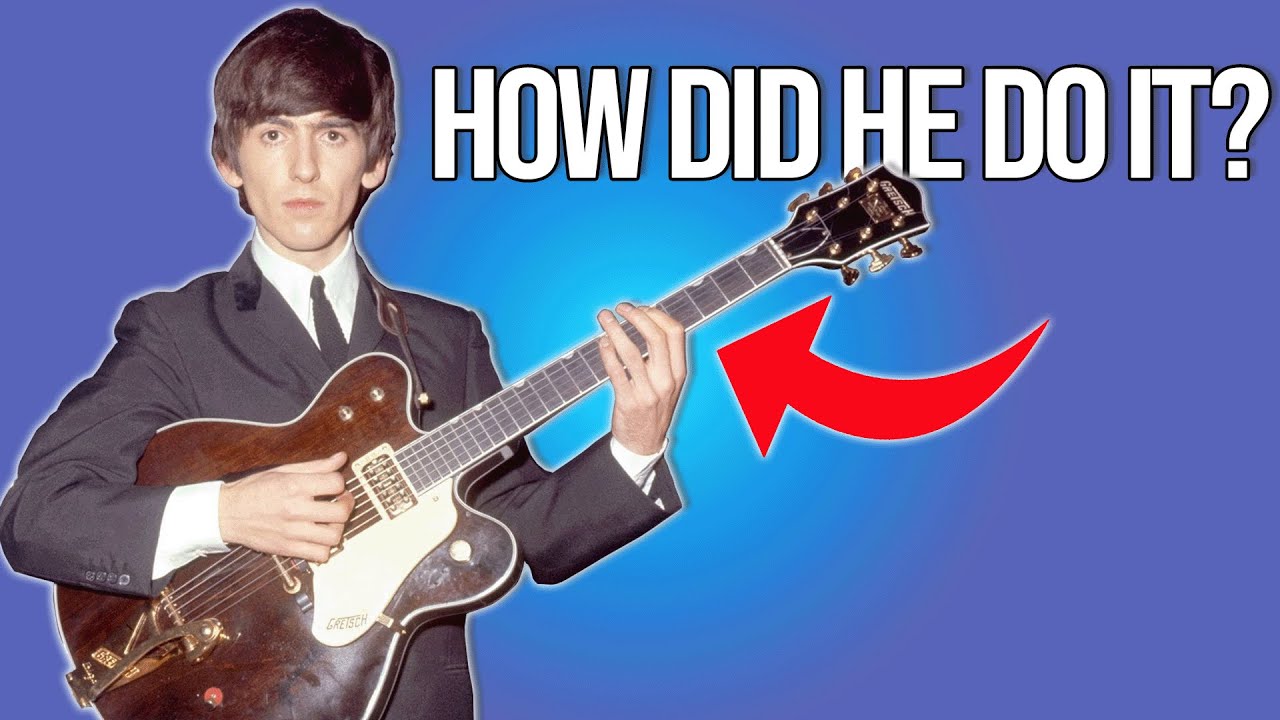
This Beatles Guitar Solo Is UNBELIEVABLE - Something
In this lesson
Tap a time to watch that part. loops it, so you can slow it down and play along.
-
Key idea Phrases end on chord tones
Harrison's Something solo constantly targets and ends phrases on chord tones; the one non-chord tone (D over C) slides immediately into E, the 3rd.
-
Key idea Rhythmic displacement
Restate basically the same idea starting earlier or later in the bar: 'rhythmic displacement'.
-
Key idea Play the chord's defining note
When the chord changes color (C to C7), the line uses the defining new note (Bb), which leads down to A in the coming F chord: lines can track temporary key changes.
-
-
Key idea Mocking 'they didn't know theory'
Adam repeatedly jokes that Harrison 'probably didn't know theory' yet keeps hitting the right theoretical notes; the ear goes to chord tones, which is why they matter.
-
-
Key idea Copy-paste a triad fragment down to the next chord
Over F then C/E Harrison plays 3-5 of F, then 3-5 of C: the same triad piece moved down to the next chord.
-
-
Key idea Learn by ear; fingering sets the timbre
Adam learned the solo by ear; playing the D7 line on one string matches the recording's gliding timbre in a way other fingerings don't.
-
-
Key idea Wrong notes are fine if they lead to right notes
A chromatic run of 'wrong notes' works because it lands on a chord tone; what matters is not the notes in the middle of the phrase but where they lead and land.
-
-
Key idea Don't over-obsess with line cliches
Over a line cliche (Am, Am(maj7), Am7) you can treat it as A minor; the moving inner voice is background color.
-
Key idea Same notes, change the rhythm; phrasing = how long you play and don't
Rather than reaching for different notes, play the same notes and change the rhythm or phrase length; phrasing, how long you play and how long you don't, is one of the most important parts of soloing.
-
-
Key idea Melody that is all chord tones through changes
The famous closing melody is chord tone after chord tone through F, Eb, G, C (5 of Eb to 3 of G to root of C): a textbook voice-leading resolution from V to I.
-
Practice it
- Drill Land on a chord tone ProFor “Phrases end on chord tones”. You'll land on the note that spells each chord, right on the change. Open
The guide
In the learning paths Start Soloing From Zero, Solo Over Chord Changes and Solo Over the Blues.
Transcript
YouTube's automatic captions. Tap a time to watch from there.
- today's video we're going to be talking about one of the best solos in my opinion ever the solo on something by The Beatles as played by George [00:28] Harrison [00:51] so first of all the chord progression is really cool and it goes through a couple of different keys we're not going to get so into the chord progression but we'll be talking about it as we go along so the first chord in the progression is actually just a C major chord and he plays this little nice lick over that c major chord so you sliding from D to e and
- then playing G and then back to e so what I'll say about this phrase is that it does what I'm always talking about it's targeting a chord tone so the notes in the chord c are c e and G and what do you know he lands on an E note note there actually there's only one note that's not in a c chord and it's say d
- and he immediately slides it up into an e then he plays almost the same thing this is a big thing to talk about motivic development so it's going to go like this so now uh we're going to actually play the same note this G that we're playing on the eighth fret of the second string before but we're going to play it
- on the 12th fret of the third string just CU it's a little bit easier to execute this bend that we're going to have to do so we're going to slide from seven to n on the third string and then we're going to bend the 12th fret up a full step so we're bending it up from G to a so a is not in the chord but it goes
- right back down to G and then ends up on that same e note the third of the C chord so again still actually chord tone targeting so we have right so uh so far very simple but effective because very nice rhythmic
- choice too if you notice on the first measure he starts right on B2 there's a quarter rest but then in the second measure he starts the phrase slightly earlier very very interesting so that's what I would call rhythmic displacement it's basically the same idea but it starts earlier it starts later it's been
- displaced from where it started oh by the way I forgot to mention the last bar it turned into a C major 7 chord which is c e g and B so that C major 7 chord kind of changes the character a little bit but it's still in the key of C right now it's turning into a C7 chord
- which is C E G B flat so now this chord is actually designed to take us to the next chord in the progression which you'll see which is f and so it's kind of actually changing keys to the key of f here that B flat note which you'll see he's actually going to play in the line that B flat it
- serves to go down to a in the F chord so that's why I said the chord progression doesn't stay in the same key the whole entire time it is temporarily going actually to the key of f here so over this C7 chord now it's still expanding on the same idea we're going to have
- this lick so that licks does spill over into the next uh chord but I'll show you so far we're going to have that same slide from 7 to 9 and then we're going to have a pull off from 8 10 to 8 on the second string
- so that's G A and G so we already used those notes before actually we used the G A and the g before bending but now we're not bending we're just doing hammer on and pull-offs and then now you're going to slide from that g up to the 11th fret which what do you
- know is a B flat note H I don't know for some reason like George Harrison probably didn't know music theory or anything like that but for some reason you just just keeps hitting all the right notes of that work in the music theory you know stuff so you know I don't know maybe maybe there's no reason to talk about music theory you know just
- just forget about it but anyway all joking aside very cool that now all of a sudden he's using that B flat note we never saw that note before now on the C7 chord which is defining note is a B flat in it well he uses that B flat and then it goes up to the 13th fret
- which is a c the root uh and then slides up to D and back to C so D would be the second or the ninth and then back to the root and then we are going to now transition to the next measure in the
- solo so we got this the end of that phrase is so we're bending the 15th fret up to actually it's a d note on the 15th fret of the second string but we're bending it up to an E so e and then back
- down to D and then C and then ending Boom the end of the phrase that quarter note is on the 14th fret of the third string and what do you know now all of a sudden we finally got to that F chord and coincidentally yet again he lands on a chord tone of f so this would be an F
- Triad here like if you just played the 15 14 and 13 on the fourth third and second string that's an F major Triad and he goes lands on one of the Triad notes oh like mean you mean like I've been telling you guys all the time that you need to know your Triads so that you can land on the Triad notes oh George
- Harrison you know doesn't care about that probably you know I'm sorry I just I have to do it there's so many people when I make these videos they say oh who cares about all this stuff ah they didn't know that H theory is stupid ah it makes you sound bad or I don't know what you know anyway I just like to make fun of it it's very funny uh so now the
- chord progression is going to actually change Keys again because it goes if you look they play the F again and then it goes to C over e and it goes to D7 in the next bar so this is very interesting see way he plays over this because those chords are changing quickly so C over e by the way don't overthink that it's
- basically just a c chord um the reason that it's C over e is because it makes this cool Baseline you always see this with Slash chords this kind of Baseline goes f e d it gives this stepwise moving down Baseline instead of just like f c d
- i mean that sounds cool too but it's even stronger actually to have that stepwise moving down so that's why that chord is like that c over e but it's basically just a c chord and it functions the same way so over the F chord he goes and then over the C over e goes it's literally just taking like a
- piece of a Triad shape and move it down that's the exact same thing that we played four in the F chord the a note there on the 14th fret of the third string and then C so that's the third and the fifth of the chord and then on the C chord he plays e and G which is the third and the fifth of the chord he
- literally just cop basically copied and pasted the same thing on two different chords and then Bingo we're going to land uh we're going to the next measure we're going to land on D7 there and we're going to see that he's going to lamp on this note on the second fret of
- the third string and what do you know that's another freaking chord tone it's an a note on the D7 chord it's like unbelievable like how I don't know he didn't know this stuff I wouldn't doubt if he didn't but for some reason the ears go to the chord tones and
- that's why it's so important because the chord tones of what sounds good so now we're on this D7 chord and then this really cool lick comes up so that was the end of the phrase you know and then we're going to have this cool lick that's on one string and then it's going to change
- strings but let's check this out so we play the fourth fret of the third string pull off to the second fret again and then immediately slide up to the seventh fret of the third string which is a d note which is part of that D7 chord d f SHP and A and C by the way is in the D7
- chord and also by the way D7 is not in the key of f it's not in the key of C either it's actually technically the key of G for a second is what's happening you would only find that cord in the key of G but anyway and then there's another freaking chord tone this 11th fret of the third
- string is an F sharp remember I said d f and AC look here's an a here's a d and there's an F sh not only that but it's all one string now I admittedly I learned this solo by ear and I'm trying to get it as close as I can to what I hear maybe he played it with a different fingering but
- to me this is the absolute closest way I was able to get it to sound how he plays it on the on the recording is you can hear this kind of gliding on one string it's definitely not like a no that doesn't sound right it doesn't have the right tamber to it it sounds way better if you go that's why playing Triads on one
- string too is really cool by the way uh and then he goes so bending the 10th fret up a whole step the 10th fret is an a another chord tone but he's bending up to B which is the Sixth and then back down so it's like bending from a chord tone to a non chord tone and back down to a chord tone
- now we're going to a G chord so it's funny I just mentioned that D7 chord was from the key of G well guess what it goes to a G chord but the thing is that a G chord also happens to be in the key of C so this is why you see in a lot of chord progressions they change keys but like temporarily right so you know it's like
- oh we're wandering away from the key of C just for a second but eventually it's going to all come full circle and come back to the key of C so now we have this really cool so this is now we're on the G chord so we're playing the same notes that we were on the D7 chord for a second but
- now they relate differently to the G chord so we're in a g the chord tones are G B and D so we're bending this a note up to a b so now all of a sudden we're bending from a non- chord tone into a chord tone and then landing on this eighth
- fret of the second string which guess what is a g which is a chord T and then this is a really really interesting line so so this is uh I I almost don't even want to try to anal analyze it but I will because it is analyzable so look
- this is just this chromatic it should be a bunch of wrong notes right what that doesn't make any Theory sense right H theories crap we don't need to learn it oh wait a second look it's chromatic downwards into a chord tone which is B
- so it's a bunch of wrong notes but they lead into a right note and then he slides up to on the first string the 12th fret and guess what that's another chord tone so at the end of those little Snippets of just wrong notes the
- chromatic stuff it lands on a chord tone and then it lands on another chord tone so so that's why even though like even me man I would sometimes be like it would be hard for me to convince myself to play something like that especially
- in a song like this but it works perfectly because of where it's going because it is targeting the chord tones it's targeting the chord tones and that's why even if you play wrong notes it doesn't matter the notes in the middle of the phrase it matters where do
- they lead to and where do they land he could have gone like this and then it would actually landed on the same notes going up to B that same B note and then or it would have still had a similar effect but you know it's funny that's one of my favorite parts of the solo
- right there is just that like a bunch of straight up uh what most people consider to be wrong notes so then we go to a a minor chord this is very very interesting because this color of this A minor chord is going to change so if you notice it goes from a minor to a minor
- major 7 so a minor would have a c and e and then a minor major 7 is like an A Minor triad but it has a major 7th interval in it which is very I've talked about this before I called the James Bond chord you'll hear it at the end of a James
- Bond um song or whatever it has a very distinctive sound to it but the reason is that uh Rick Bato will call this what's called a line cliche so it goes like and then you hear the roots go down to the major 7th and then right after that you see a minor 7 it the major 7th
- G sharp goes down to G so you'll hear that a Minor 7 sound you hear so you hear that chord and the color of the chord rather changing the entire time which creates this very very
- beautiful and interesting motion with the harmony but with that being said you don't need to like over obsess with it when you're soloing over cord like this okay you can just kind of treat it as a minor and it'll sound good it's just like a minor but there's some stuff happening in the backgrounds you don't
- need to over obsess with it too much so here this is also one of my favorite parts of the Soul so just this you pick the seventh fret of the third string you bend up a whole step to e and you just keep like wailing this bend over and over without
- picking again so so you do that a couple times I wrote it how many times it happens there I mean just listen to the solo it's kind of silly to count how many times he does it just just listen to it so up but then you end on that fifth fret of the third string which guess what is a
- c which guess what is a you got it it's a chord tone so it's constantly you see in this solo ending the phrase on a chord tone and and then he just plays that again but kind of rhythmically displaces it a little bit just you know playing it longer right it's a it's a variation
- thinking of rhythms he could think oh I got to play different notes no play the same notes just change the Rhythm somehow oh let me play a longer phrase instead that's what we talk about phrasing phrasing is one of the most important parts of your soloing to is how long are are you playing and how
- long are you not playing here he's messing around with the phrasing which is really cool he could have just in the same thing but no it's like you know and I know sometimes that that part's kind of a pain in the butt if you're not super Adept at bending yet
- that'll get you a lot better and it'll get those calluses in your fingers uh really rocking and rolling when you uh whale out on that bend so much so let's go to the next bar uh so here's uh we're going to have some cool sliding stuff so one more time he does a little bit more the same
- Bend and then again ending on that c which is a chord tone and then sliding up to the ninth fret of the third string which is an e which is also another chord tone and then playing this G so the G is the seventh of the a minor 7 so it's a chord
- tone but it's not a Triad it's the seventh of it but I've talked about this before sometimes it depends on whether or not you're going to continue treating the seventh as a chord tone or non- chord tone in this case I'll say it's a chord tone and then we jump all the way up here to the first
- string so you bend from the 10th fret and by the way the chord just switched to D7 so you bend from the 10th fret which is a d a chord tone and you bend up to e which is teally a non chord tone but then you go right back down to D which
- is a chord tone and then C D C so you just uh actually uh hammer on pull on those hammer on and then pull off and then so those are by the way both chord tones C and D the chords
- sorry the notes in D7 or d f a c so that's the seventh is C so and then it goes down to we about to end the solo here we're going to this sequence which is my fa favorite like little thing from the song that everybody sort of recognizes when you
- hear this and this is a super duper cool Melody I want to explain it as we wrap this video up so he lands right on an a note on the F chord so this progression it goes F E flat G and then it ends on a
- c chord so so that's why that's a very very interesting chord progression we'll talk about that for a second but a you want to just guess if that's a chord tone or it's not a chord tone yeah it's a chord tone that's right F has an F A and C
- okay so it's this and then it does this little Bend before we go to the E flat it's a prebend actually you pre-end seven which is a b note you pre-end it up to C which guess what that's a chord tone again remember I said f a c well you bend up to C pre-end up to
- C and then you pull off back to a so it's just like Corone Corone Corone Corone and then he plays the six fret of the first string which is a B flat you want to guess if that's a chord tone or not yeah it's a chord tone so if I play an E flat major chord
- which is the chord there E flat G and B flat it's the fifth so it's the fifth of the E flat major chord and then the chord immediately changes to G so he plays B flat and then B on the first string which is another
- chord tone it's the third of the G chord so it's very interesting B flat is the fifth of the E flat chord and then B is the third of the G chord it's all chord tones that's why that Melody sounds so cool over that chord progression and then by the way the B goes up to
- C which that's just perfect boach like you know uh voice leading from the five chord which is G going back to the one chord which is C so notice how we went through that journey and that chord progression and then all of a sudden we just ended up right back on seat so what's the lesson to be learned from this lots of really cool articulation
- really cool phrasing but lots of chord tones chord tones make you sound good period end of story so if you want to learn how to master the guitar fretboard so you can know how to Target chord tones in your solos just like George Harrison was doing here and know how to
- find all the chord tones in every single chord that you can need anywhere on the guitar fretboard no matter where it is and learn every single other fundamental aspect of the guitar fretboard that you need to know to master the guitar fretboard then what are you waiting for you need to go to Jamesville decom right
- now and check out the Jamesville GPS fretboard fundamentals course if you have no idea the things that I'm talking about spelling out any of these chords or how to find any of these arpeggios the chord tones on the guitar fretboard well you need to go check out the course right now because these are the things
- that everybody needs to master if you want to play guitar at the highest level that you possibly can make sure you subscribe to the channel and hit the notification Bell or else the subscription basically useless you're not going to get notified it's just going to get buried under a bunch of other stuff and make sure you hit the
- like button really really appreciate it and as always listen learn and jam