
After each pass the video waits as long as the loop, so you can play it back.
Start slower with −, and it climbs to 100%.
Keys: Space play · ← → 5 s · [ ] set start and end · − = speed · L loop
Practice and technique · Advanced
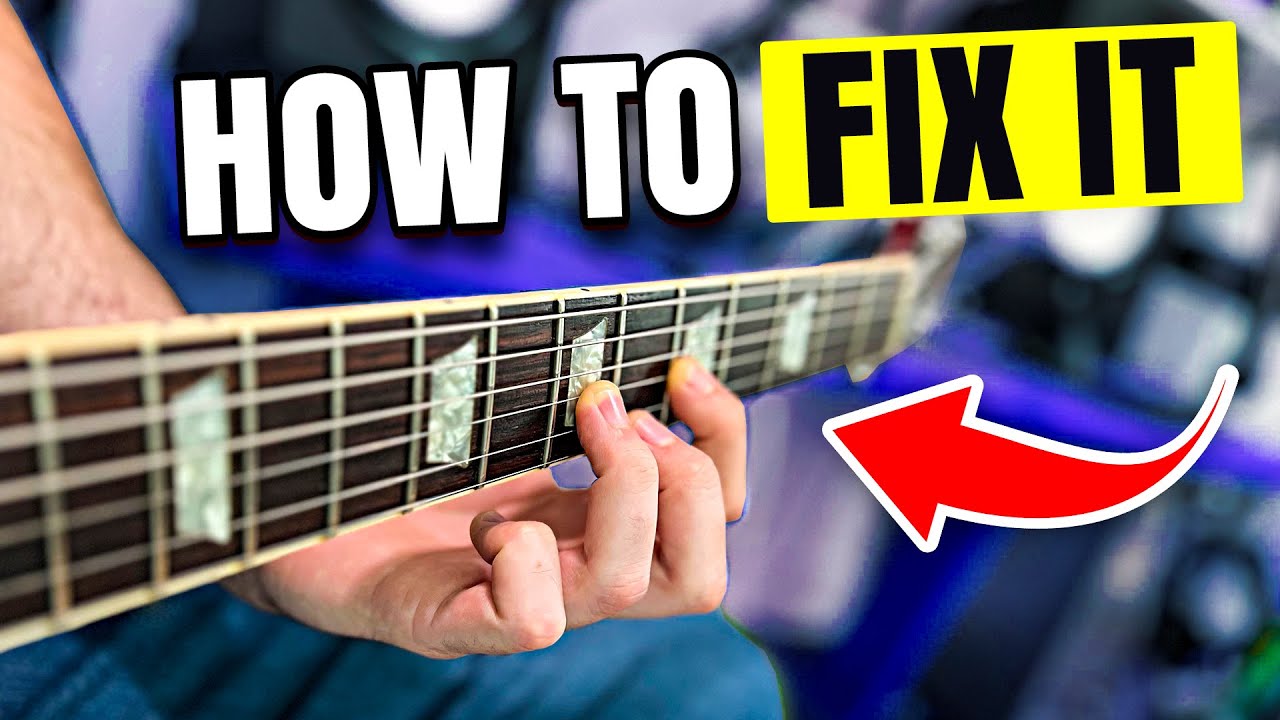
The WORST MISTAKE Playing Hammer Ons and Pulloffs
In this lesson
Tap a time to watch that part. loops it, so you can slow it down and play along.
-
Exercise Slow-metronome legato ladder
With a metronome at 70, hammer/pull between two notes (3rd string 5-7, A minor pentatonic) in quarter notes for perfect control, picking once every four notes; then every string of the box and chain them into lines; then over a track: quarters, eighths, sixteenths, bursts of four if 16ths break; then start from the higher note (pull first); then two notes per string switching strings.
-
-
Key idea Practice a concept by improvising a solo with it
He practices concepts in an improvisational context: to work on hammer-ons, play a solo focusing only on hammer-ons/pull-offs; for bends, a solo only about that bend. Improvising with the concept makes it come out naturally on gigs, unlike repetitive exercises.
-
Transcript
YouTube's automatic captions. Tap a time to watch from there.
- the first thing that they do is they just immediately and then because of that we're gonna be talking about the biggest mistake that I see people making when they're executing and practicing hammer on and pull-offs we're going to talk about how to fix that mistake and then how to practice Hammer runs and pull-offs in a really creative and fun
- way that's going to directly help your soloing so without further Ado let's get right into it the main problem and mistake that I always see people doing when they are learning how to play hammer on and pull-offs is that they are trying to execute hammer on and
- pull-offs way too fast and it's understandable because it's a very natural thing to do because it's kind of weird at first when we learn a hammer on and pull off we're like wait a second I need to whack my finger Down super fast in order to get a note to sound out just as loud as if I pick it so every single
- time I see someone especially when they're first learning how to play hammer on or pull-offs it looks something like this every single time it's just like you play the first note and then instantaneously hammer on to the next
- note so I want to address this problem really quick so actually I know that a lot of times we are learning hammer on and pull offs because we actually want to learn how to play faster but actually we need to more than learning how to execute them fast we need to actually be able to execute them with control and in
- time and ironically enough that actually involves us playing them slower so instead of playing your first note you're going to hammer on from and then immediately hammering on what I want you to do is start by trying this really simple exercise you're going to play the
- note wait and then hammer on so like this so that's going to teach you how to disconnect the first note from the second note in a hammer on the speed of which that you are actually whacking your finger down on the fingerboard has
- absolutely a Zeto to do with how fast after the first note you execute that so in other words you don't need to instantaneously execute the hammer on after you pick the first note you can wait actually you could wait forever you could [02:55] go so every single person whenever I teach them how to play Hammer run the first thing that they do is they just immediately and then because of that they actually don't execute them when they're actually trying to solo it's not in time it's just like I'm just going to move my finger as fast as I possibly can
- so by the way the exact same thing applies for pull-offs so when we're executing a pull off it's kind of the opposite of a hammer on we're starting on a higher note on the same string and pulling off to lower note on the same string so I always see people going like this just as fast as they can just
- ripping that finger out of there so what I want you to do is try the same thing with your pull-offs so play the first note hold it and then pull off try that a few times and then also one other tip for
- pull offs in particular is that they really should be called pull Downs because if you just lift your finger off you don't really get the volume on the second note after the pull off that you want rather you should be pulling very slightly
- downwards because that is actually going to in effect pick the string with your finger like this if I could actually do it without without my pick look check this out I'm actually picking the string with my finger so I just want to point that out one more thing going back to hammer on
- that you need to pay attention to as well is even though we're trying our best to really whack that finger on quickly in order to get a lot of volume out of our hammer on once the finger is down do not press down really hard so that's something
- that I've done in the past and I I keep seeing people do left and right is they think oh because I really just moved my finger quickly now all of a sudden when it's already down I need to continue pressing super hard no when you have that finger down and you've already executed the hammer on you can just
- chill and let your finger sit there really relax right now I have almost no tension on my finger I'm just holding it there there's no reason for me to press down super hard so now once you've done those couple of things make sure that you move on to now working actually in time so
- what we're going to do is we're actually going to rather than playing a bunch of hammer ons and pull off super fast we are going to play them in time but quite slowly so let's see I'm going to put on a m room at a temp of 70 BPM and by the way as you can see here I'm just hammering on from the fifth fret to the
- seventh fret on the third string okay and actually this is all part of just your typical a minor pentatonic box okay so you should actually practice this with all of the notes and on the same string in any given pentatonic scale or major scale but we're going to be going over that a little bit later on so we're
- still going to just focus on these two notes here okay so first of all we should actually be able to hammer on and pull off quarter notes just like [06:49] this so you notice that's very very slow but it's teaching me to have absolutely perfect prec precise control over those hammer on and pull-offs and notice how long I have to hold each one before I decide to go ahead and actually execute
- that hammer on or pull off now while we're at it I want to point out that there are several different variations of which you can execute hammer on and pull-offs in combination with picking okay so what I would recommend starting off with is picking the first note hammering on pulling off and hammering
- on one more time and then repicking so in other words you're picking every four notes so 1 2 3 4 1 2 3 4 so I'm picking on beat one every time cuz after a while you're going to find that the sound is
- going to start to drop off a little bit if all you do is you just never pick again now once you start getting way better at your hammer on and pull-offs and you get it really consistent then you could theoretically just keep going forever like this I'm just going to pick the first time and I'm just going to not pick ever again [08:30] so you can see it also by the way helps if you have some kind of compressor on your guitar that'll really help you keep those Hammer ons and pull offs going longer and have the volume out drop off but actually the main thing that keeps those hammer on and pull offs going without having to pick again is actually the pull off itself remember what I said
- earlier the pulloff actually literally picks the string sorry I just muted the string with my right arm there I'm literally picking the string there with my third finger so now if you're playing with like for example the a minor pentatonic scale you should be able to execute that same movement on
- every single string so the fifth and the eighth fret on the sixth string and then Fifth and the seventh on the fifth string etc etc so let's see what that would sound like with a metronome just quarter notes
- still okay really slow because the idea here is to have perfect control [10:00] and then of course it you need to practice it so you can chain them together like that so then that way you can actually start to create lines with your hammer on and pull offs and not just be limited to the same notes in a row so now once you've done that and you can do that perfectly just like that now you're ready to start actually playing
- faster with your hammer on and pull offs so now I'm going to put on a simple track it's just going to be an F chord in the background good sound sound and cord underneath an A minor pentatonic scale and now what we're going to do is we're going to improvise but with a focus on working on our hammer on and pull offs so those of
- you who've been watching for a while you might notice that I'm a huge fan of practicing Concepts in an improvisational context so in other words if I want to work on my ham runs and pull offs I'm going to say okay I'm going to play a solo but all I'm going to do is really focus on my ham RS and
- pull-offs or if I want to practice my bends I'm going to say I'm going to play a solo but all I'm going to do is work on executing this Bend or whole bunch of different bends or any number of different concepts I want to actually practice improvising with that concept and not just practice some repetitive exercise because if I practice actually
- improvising the concept then it's actually going to start to show up and my playing so if I practice improvising with a lot of hammer on and pull-offs it's way more likely that then when I'm actually in a musical situation I'm playing a gig I'm playing over a track I'm recording I'm playing with a band then I'm going to be able to actually have that stuff come out naturally in my
- playing without thinking about it so let's see what this would look like all right so we have this track here we have a Tempo it's going 1 2 3 4 1 2 2 3 4 so first of all I should be able to exec quarter notes like we were just doing [12:15] so then if we feel comfortable with that let's start trying to play eighth notes so one and two and one and two and three and four and one and two and three and four and [12:45] and then now if we feel really comfortable with those eighth notes then we have to start trying to see if we can play some 16th notes so one E and A 2 E and A 3 E and A 4 E and A 1 E and A 2 E and A 3 E and A foren so that's if we want to be able to play really [13:12] fast and now you might start finding you're having a little bit of trouble with that if you're having trouble with that try a short burst of like four notes so and take a break [13:36] but you got to make sure that it's in really good time now one other thing that I want to mention is that every single thing we've been doing so far has started with the lower note on the string so I've been starting with my first finger we should be able to execute all these in an inverse manner so starting with a pull off and then
- hammer on so starting with the second note on the string or the higher note so in other words if we go back to the third string let's start on the seventh fret first instead of the fifth fret [14:25] so and then once you get comfortable with that then then you can start trying to only play one on each string so something like this right so I'm switching strings every two notes let's do that a little bit slower with eighth notes like [14:48] this that's starting from the higher note what have I start from the lower note and now if I play 16th notes that was eighth notes and then you can start improvising
- around with it try to take two strings that are next to each other [15:33] and you can see just practicing these pretty simple ideas at the end of the day it's literally just moving back and forth between two notes that we want to get really good at and then creating as many variations of that and being creative with it is how we're going to
- get really good at not only executing hammer on and pull-offs in general but specifically being able to improvise with hammer on and pull-offs so if you want to learn how to master the guitar fretboard so that you can know how to play in any key all over the guitar neck and then you'll be able to apply this
- technique of hammer on and pull-offs to any key anywhere on the neck then make sure you head on over to Jamesville decom right now and pick up the Jamesville GPS fretboard fundamentals course also make sure you head on over to the Jamesville merch store and pick up an awesome Jamesville t-shirt just like
- this one there's also lots of different colors available they fit great they're super comfortable super soft it's one of my favorite t-shirts and I wear it all the time we also have hats mugs all kinds of other goodies so you can represent the Jamesville Community out in the world also make sure you check
- out my new song it's called My divine that's what you're listening to in the background right now you can check it out on your favorite streaming platform in the link in the description down below make sure you subscribe to the channel and like the video please like the video I mean only like 2% of you guys are liking the video come on we got to get that percentage up it really
- helps with the algorithm and helps out the channel when you hit that like button also drop a comment anything you can do sharing commenting liking subscribing it all helps and I really appreciate it all righty everybody until next time listen learn and jam