
After each pass the video waits as long as the loop, so you can play it back.
Start slower with −, and it climbs to 100%.
Keys: Space play · ← → 5 s · [ ] set start and end · − = speed · L loop
Rhythm · Intermediate
Why Playing Slow Is HARDER Than Playing Fast
In this lesson
Tap a time to watch that part. loops it, so you can slow it down and play along.
-
Key idea Slow exposes microscopic timing
Playing slow is rhythmically harder because it exposes millisecond differences that fast playing hides.
-
Exercise Progressively slower quarter-note click
Play quarter notes with a click at 80, then 40, then 20 bpm, trying not to come in early or late; one of the most valuable things to practice.
-
-
Key idea Slow practice improves fast chunking
Fast playing uses inertia and chunking; slow practice forces deconstructing each part so the chunks are accurate (arpeggio demo: fingers feel 'magnetized').
-
How to practice Every note stands on its own when slow
When slow, attend to each note's tone, pick attack strength and angle.
-
Exercise Slowest press-and-release / minimal lift
Rest four fingers on a string (frets 4-7, string 3) without pressing; press and release as slowly as possible without leaving the string; lift fingers the least amount, slowest possible.
-
-
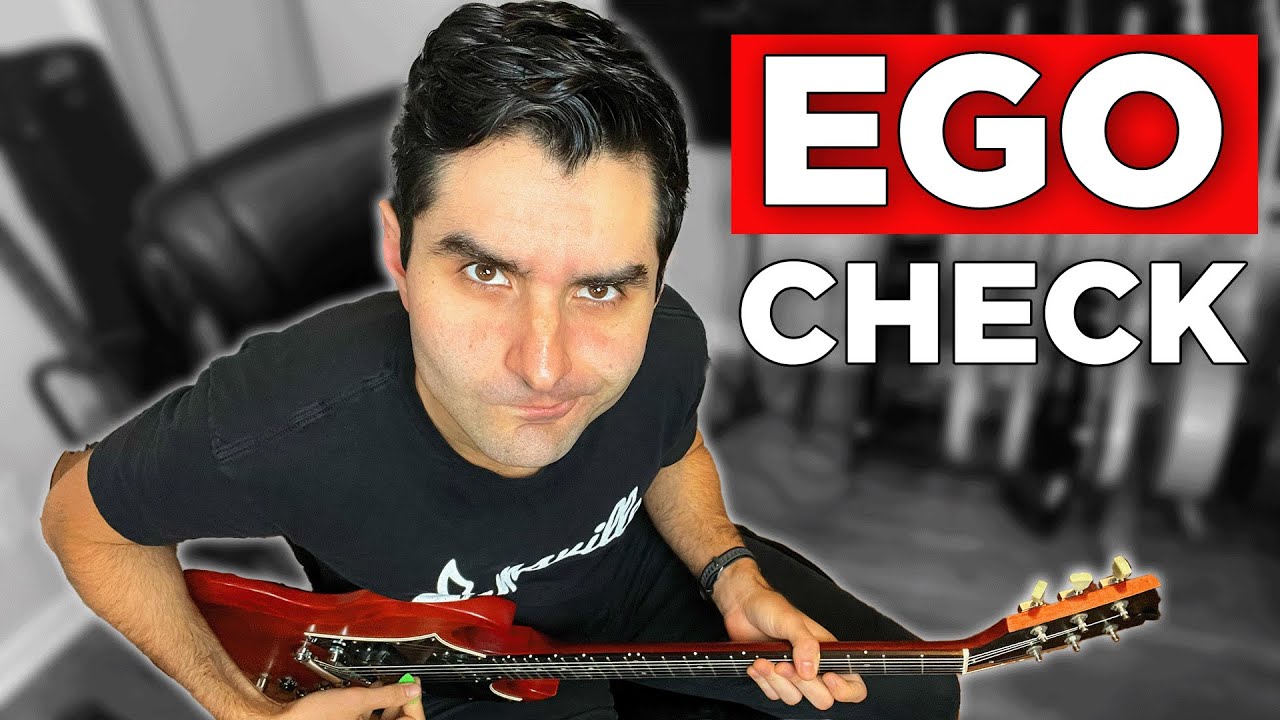
Key idea Slow practice is an ego blow; install before running
People avoid slow practice from ego; practice way slower than you can already play. New musical information is an app you must install (slowly) before running it.
-
Practice it
Transcript
YouTube's automatic captions. Tap a time to watch from there.
- The first reason that playing slow is actually harder than playing fast is that playing slow is actually more difficult rhythmically because it exposes microscopic differences in your rhythm and timing that may go overlooked when you're playing fast. For example, one of my favorite things to do to
- practice my rhythm is actually to play with a progressively slower and slower metronome and just play quarter notes. For example, if I started with a metronome at 80 beats per minute That already seems kind of slow, but now let's cut it in half to 40 beats per minute.
- Now it's already starting to get pretty hard to get those quarter notes exactly locked in down to the millisecond with that metronome and it's even harder if I now cut it in half to 20 beats per minute. It is insanely hard to play that slow
- and not come in early or come in late on any of those quarter notes and to get that consistent. And because of how hard that is, it's actually one of the most valuable things that you can practice as a musician in general. The second reason playing slow is actually harder than playing fast is because you can take
- advantage of inertia when you're playing fast. So if I'm trying to memorize a structure or lick, if I play really really really slow, I have to deconstruct every single last part of that lick or that structure, scale, whatever happens to be that I'm
- practicing and I can't really utilize chunking. Now chunking is very important when you are playing fast, but the accuracy of your chunking is going to be a lot better when you spent some time practicing something ridiculously slow. So like if I want to practice playing an
- arpeggio like this If I just take a couple of minutes and practice that insanely slow like And I can really dissect every single part of that I'm picking, hammering, picking,
- picking and hammering and actually locking in those hammer-ons, too. Once I do that, my fingers are literally going to feel like magnetized to those notes that I want to play and after only a few minutes, I'm going to be able to play the thing way more easily fast. And what this does, too, is it actually
- exposes all of the little tiny mistakes in our technique that add up and create big mistakes like flubbed notes and bad rhythms and so on. And also when we're practicing really slow, every single note literally needs to stand on its
- own. We start paying attention to what is the tone of each note sound like? Am I picking really hard or am I picking softer or am I picking somewhere in between? How what does it feel like when my pick actually crosses those strings? Is my pick actually hitting at an angle
- where it sounds a little bit different? Is it hitting more parallel to the strings where it sounds a little bit more abrasive? We can actually almost over-analyze what's going on and of course at some point if our goal is to play fast, we do have to play fast, but it's actually so difficult when we're playing slow because we're paying
- attention to all these different things at the same time. But ironically because it makes it easier to pay attention to all those things at the same time. The third reason that playing slow is actually harder than playing fast is because playing slow forces you to actually control everything that's going
- on. Take your fingers and line them all up on a string like this. So I have my fingers on the third string, fourth, fifth, sixth, and seventh fret. Now just put them all on the string but don't press down. A lot of times when we put our fingers on the strings, we just automatically press down because it's instinct. But from this position, we can
- actually practice one of the slowest things that I can come up with which is actually pressing your fingers down and then releasing them without taking your finger off the strings. This is one of the best forms of control you can develop over your left hand. And we can't ever really do anything like this
- when we're playing too fast. So now when I'm playing really slow, I can focus on actually lifting my fingers up like if I want to play this note here with my first finger, well I do have to actually stop these three fingers from touching the neck, but see what's the absolute slowest that you can lift them up and
- what's the absolute least amount that you can lift them up. So for me, it would look something like this. So you see here, my fingers are all down and now I lift them up just a hair, literally just a hair. This is the kind of control that allows you to actually play faster
- accurately when it's time to actually do that. So if you're still even watching this video, chances are that you're disciplined enough to actually do this kind of slow practice, but this brings me to the last thing I want to talk about which is why do people avoid this kind of ridiculously slow practice? I think that for the most part, it's
- because it's kind of a blow to the ego. Why do I say that? Sometimes even if you could play something faster, you need to recognize that you're not really doing it as well as you could be and the only way to iron out all the different issues in that is to actually practice it
- ridiculously slow, way slower than you're actually already capable of playing it. And this doesn't just go for technical things by the way, too. This can also go for practicing improvising. For example, improvising over some difficult chord changes. I'll give you an example actually. I've been working on this tune, it's called Humpty Dumpty
- by Chick Corea and it has some crazy changes to it. It goes like E flat major to D major to F sharp major to F major to a bunch of other chords. But one of the ways that you can learn how to improvise over a super complicated chord progression like that is by
- ridiculously slowly playing the arpeggios or the scales that fit over the chord progression, something like this. Now I switch chords. Now I switch chords.
- Now I switch chords. Whereas the actual tune itself is going to be way faster, but you'll see that you actually will automatically after spending a few minutes playing something like a quarter as fast as you think you
- can play it, then when you go back to actually playing fast, you're just going to play it a million million million times better than you did when you first tried to play it fast. Practicing slow really shows the truth behind what's going on and that's where the real breakthroughs have always happened for me in my guitar playing. Here's the
- simple way to think about it. Any new musical information that you learn is kind of like an app on your phone or your computer and before you run the app, you need to install the app. And so the way that you quote install new musical information into your playing is
- by practicing it slow and you don't want to try running the program or the app before you've 100% installed it. So that kind of makes sense. This is one of the things that will really really really help you get better faster at guitar ironically. Practicing slower makes you get better faster and if you want to
- know how to get better so fast that it feels like cheating, then watch this video here where I show you all the different things you should think about when you're practicing so you can get better as fast as absolutely possible in your guitar playing. Go to jansvil.com if you want to learn how to master the guitar fretboard and if you enjoyed this video, subscribe to the channel, hit
- that thumbs up button, and until next time, listen, learn, and jam.