
After each pass the video waits as long as the loop, so you can play it back.
Start slower with −, and it climbs to 100%.
Keys: Space play · ← → 5 s · [ ] set start and end · − = speed · L loop
Rhythm · Intermediate
The Rhythmic Scale (Calibrate Your Time!)
In this lesson
Tap a time to watch that part. loops it, so you can slow it down and play along.
-
Key idea Rhythm is the heartbeat
Rhythm is how sounds are organized in time, like the heartbeat of music: if the rhythm stops, the music stops. Tempo shapes energy and mood.
-
-
How to practice Hear a faster subdivision inside a slower one
While playing whole notes, think what eighth notes sound like over them; hearing other subdivisions gets every entrance exactly right.
-
About this video
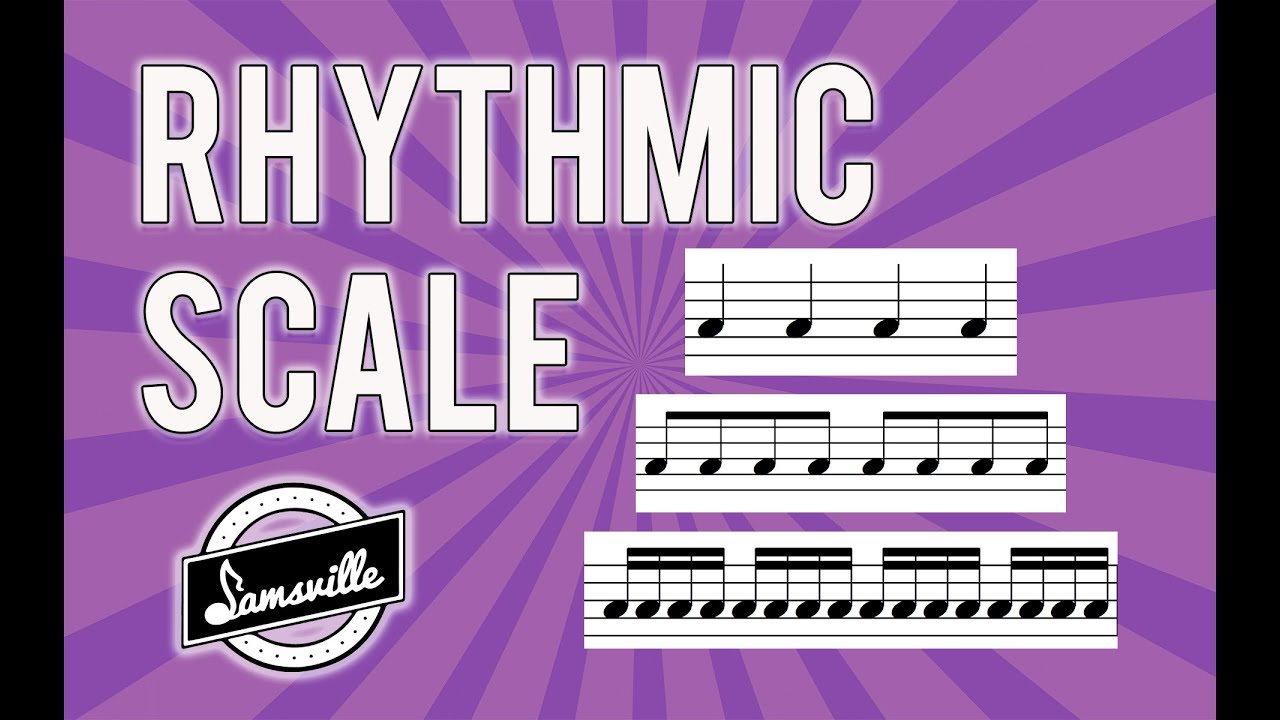
In this video we will take a look at The Rhythmic Scale, how to conceptualize rhythm, and how to calibrate your time by using The Rhythmic Scale. The Rhythmic Scale is how we divide measures of music in to faster and faster rhythms. First we start with a Whole Note, then Half Notes, Quarter Notes, Eighth Notes, and the 16th Notes.
Transcript
YouTube's automatic captions. Tap a time to watch from there.
- what's up guys my name's Adam and welcome back to jams ville so what is rhythm and how can we begin to process and understand how to play different rhythms so the technical definition of rhythm is really the way that we organize sounds within time now one way
- that I like to think about it is that rhythm is sort of like the heartbeat of any given piece of music our hearts need to be consistently beating in order for us to stay alive and in the same way that if your heart stops you stop if the rhythm stops then the music stops now this brings us to the next subject of rhythm which is tempo tempo is the speed
- of an underlying rhythm of a piece of music having a faster slow tempo has a different effect on the music if the tempo of a song is very fast it might feel like it has a lot more energy than a song that's slow a song that slower may have a more emotional or even sad type of vibe to it now that we've covered a bit about what rhythm actually
- is how do people conceptualize rhythms and write them down this brings us to the concept of time signature a time signature is two numbers that you'll see at the beginning of any piece of written music the top number of our time signature indicates how many beats are in a measure of music a measure is the amount of space between two bar lines on
- a sheet of music and the bottom number tells us what kind of note is assigned one beat in western music by far the most common time signature is four four four beats per measure and a quarter note gets one beat to understand the different ways that we can divide up one measure of 4/4 time we can use something
- called the rhythmic scale we'll begin by starting with one whole note which takes up four beats or the whole entire duration of a bar of 4/4 with this whole note we can then do what's called subdivide that whole note down to derive different note values so if we cut that hole known in half we get two half notes
- if we then cut those half notes in half we get four quarter notes repeat the process one more time we get eighth notes and then one more time yet again we get sixteenth notes these are just some of the different ways that we can divide one measure so knowing the rhythmic scale on how to divide a measure is really good but we
- need to be able to actually play these rhythms we can play the rhythmic scale as an exercise which is really good for helping you learn how to transition between the different types of note values no matter what your skill level is this is a really good way to warm up your time especially if you're going to work on something more advanced I'm gonna demonstrate this exercise for you just by playing one note you can
- practice this using any note or a chord the most important part here is obviously the rhythm
- running through the rhythmic scale like that is a really great way to get yourself thinking about different subdivisions one really important thing to keep in mind when you're doing that exercise too is to be able to think about other subdivisions while you're playing one subdivision for example when I was playing the whole notes I was trying to think about what eighth notes
- sound like over that whole note this helps you to get the entrances of each note perfectly there's a whole world of other things that we need to talk about when it comes to rhythm but those will have to be for later videos so my question for you guys is what are some of the best tips that you have for working on your rhythm leave your answers down in the comments below alright everybody thank you so much for
- watching this video if you liked it please give it a thumbs up and subscribe to the channel if you haven't already because there's gonna be more great videos coming out every week until next time everybody listen learn and jam