
After each pass the video waits as long as the loop, so you can play it back.
Start slower with −, and it climbs to 100%.
Keys: Space play · ← → 5 s · [ ] set start and end · − = speed · L loop
Rhythm · Intermediate
How To Play GREAT Rhythms In Your Solos
In this lesson
Tap a time to watch that part. loops it, so you can slow it down and play along.
-
How to practice Practice solo rhythm over a drum track
A drum track is the best way to practice rhythm: any progression or key works, no need to hunt for a specific backing track, because the focus is rhythm.
-
-
Step by step Quarter notes before any other rhythm
Quarter notes must be played really well before any other rhythm; start with one note, relaxed and locked, long and short quarters, then add pentatonic notes.
-
-
Key idea Keep the hand moving through space
Eighth notes: down on numbers, up on ands; keep the down-up motion going even while leaving space, to stay in the groove.
-
-
Step by step Less confusing first
Every rhythm on one note first, because more notes is more confusing; once comfortable with all cells, mix them up and leave space.
-
-
Key idea Rhythm first, notes are a piece of cake
Rhythm in solos is the most important and most fun thing to practice; notes can be learned in seconds, the hard part is putting things in time, so spend most of your time on time.
-
About this video
FREE GUIDE - Memorize ALL notes on the guitar in 10 Minutes:
Transcript
YouTube's automatic captions. Tap a time to watch from there.
- hey everybody in this video we're going to be talking about how to play great rhythms in your guitar solos that you're improvising so let's get started we're going to be using actually a drum track for this video and the reason is because if you practice with a drum track this is the best way to practice your rhythm
- in my opinion because you can practice literally any chord progression you want it doesn't matter you don't need to go find a whole specific backing track for the song you're playing or the key that you're working on just practice over a drum track because we're focusing on rhythms so let's start the track the first Rhythm that we need to be able
- to play really well before we can play any other rhythm is going to be quarter notes always if you can't play quarter notes forget about it so in this case a big one two three four one two three four so just start off with one note and just play that Rhythm [01:07] should be nice and relaxed and locked up so those are long quarter notes you can also do short quarter Mills and combinations thereof [01:28] now once you got that comfortable with one note start adding other notes I'm just going to use the typical minor pentatonic scale that everyone knows I want to keep it simple focus on the Rhythm not the notes you can also slide with Corner notes
- cool when you're super comfortable quarter notes you should also practice putting in some rest so I was just playing a solid stream of quarter notes
- there let's leave some space thank you [02:31] so it's super simple but it sounds good it's in time it's got right notes and it's got some variation with the space actually a lot of parts that you hear in a lot of songs are gonna be not too different than that this is going to be quarter notes and you know fitting with the harmony so now you've got quarter notes
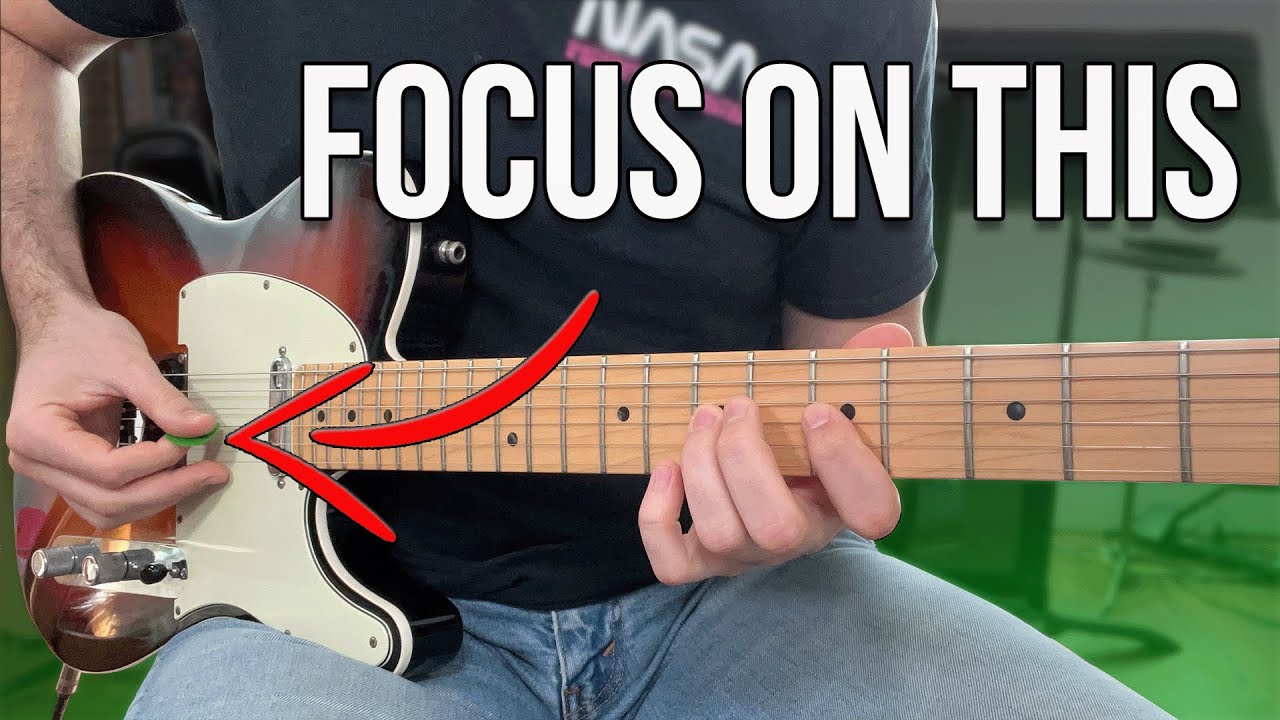
- we gotta start getting some eighth notes in there so that's our subdivision in this track that sounds like this one and two and three and four and one and two and three and four and typically on guitar we're gonna use a down up down up picking pattern okay so let me move my right hand a little bit more in the
- picture we use it down up down up so down up down up down up down up down up down up and that's going along with the ants so all the ands have an upstroke all the numbers have a down stroke so check it out [03:40] so you want to try to stick to that uh picking scheme even when you're leaving space because well it's going to help us to kind of keep ourselves in the groove more it keeps our hand moving more so even if I decide to leave some space I'm still going to keep my hand moving [04:07] so you see how my hands all just kind of moving with the beat the whole time this is super important no matter what rhythm you're trying to play but especially with eighth notes you gotta pay super close attention to that so now of course that was with one note you've got to be able to get it done with one note or
- else it's going to be really hard with multiple notes now that you're comfortable with that try it with your whole entire you know uh pentatonic scale doubling up on notes is really cool too
- so one and two and three and four and one and two and three and four and one two now one other thing before we move on
- from eighth notes is you want to start your phrases on those upbeats that's a real Pro tip right there lots of people don't do that they always start on one these aren't one and two and three and four and they don't start a lot on the upbeats they're always starting on the downbeat so listen to what it sounds
- like if I try to start an upbeats [05:53] it's hard counting at the same time as doing this now your best results is going to come when you're having a healthy balance of starting on upbeat and starting on
- downbeats that's when you start becoming you know unpredictable with your rhythms and it it keeps interest going so try that I'm just gonna mix up starting on upbeats or on downbeat try to count along one and two and three and four and foreign [06:41] and of course you can also mix in quarter notes all the previous rhythms we covered mix those in too so eighth notes and quarter notes [07:05] try some slides into notes really quick slides or really quick cameras so now that we covered eighth notes and quarter notes they are kind of fastest Rhythm we're gonna deal with today is going to be 16th notes way we count those like this one E and A two e and a three e and a four E and A one E and A two e and a
- three e and a four E and A one E and A two e and a three e and a four e and up so there's a lot of different uh combinations of 16th notes that we can do but let's just start off with just playing normal now we're gonna do the same thing with the eighth notes we're gonna use alternate picking down up down up down up down up down up down up down
- up down up it's kind of hard to sing down up that fast but you get it check it out [08:08] a lot of times I like to include that in my warm-up just one note gotta make sure it feels easy even for me sometimes when I start playing I get some unnecessary tension in there so then of course once you got that down start playing with uh some different notes foreign [08:30] doubling up with notes uh doubling up each pitch rather with 16th notes is also super duper cool uh so that actually might be getting
- really hard at this point because that's starting to get relatively fast for most people um that's like this is actually 80 beats per minute so 16th note to 80 beats per minute it's kind of like eighth notes at 160 beats per minute now you also want to figure out all the different combinations of 16th notes that we can
- play now I have a PDF called the ultimate Rhythm exercise uh check down below for link to that or you can ask me via message but let me just give you a couple of examples just by ear of some different combinations you can do with 16th notes so we can go [09:41] and the picking for that is so that's that right there is a super cool Rhythm love that Rhythm and if you start changing the notes [10:05] you can see you can come up with a lot of cool stuff if you start changing between the different notes and changing how often you switch the notes let's try another one let's try a two two sixteenths notes per beat type
- of pattern so what let's say one en so one one this is a really cool Rhythm this one starts on the E so if you start on either the e or uh that's also going to
- make it sound really really cool really interesting like starting on the upbeats with eighth note studs and then of course just taking different
- little cells like that I call them Rhythm cells let's try one more so we can actually do a similar one to what we just did but we'll start and go eat and up e and up e and up e and up like this [11:37] and the picking powder that it still sticks to that scheme so it's up down up up down up up down up up down up up down up up down up so obviously try this with one note first or all these different rhythms you gotta be able to play with one note or else how are you going to play them with more notes it's gonna be more confusing right we
- gotta do the less confusing thing first before we try to do the more confusing thing so once you become comfortable with some different 16th note Rhythm cells you should be comfortable with all of them actually then start to mix them up let's try that
- foreign [12:53] leave some space there's that one [13:16] all right so I hope that you found that helpful to me this is one of the actually this is the most important thing for you to practice if you want to be good at improvising solos and it's also to me like the most fun thing to practice too right we're not gonna worry so much about notes now of course it's nice to be able to you know change all the notes
- and all stuff and that will come with time when you focus on the Rhythm first if you get those rhythms down first guys the notes are our piece of cake afterwards right the the notes you know anybody can learn the notes in about three seconds you can learn the little pentatonic box scale or you can learn the notes on the string you can even
- learn the notes all over the fretboard if you check out my how to learn the notes in the fretboard in 15 minutes PDF but the hard part is putting all the stuff in time that's the part that makes it musical so you should be spending most of your time working on your time until next time listen learn and jam