
After each pass the video waits as long as the loop, so you can play it back.
Start slower with −, and it climbs to 100%.
Keys: Space play · ← → 5 s · [ ] set start and end · − = speed · L loop
Practice and technique · Intermediate
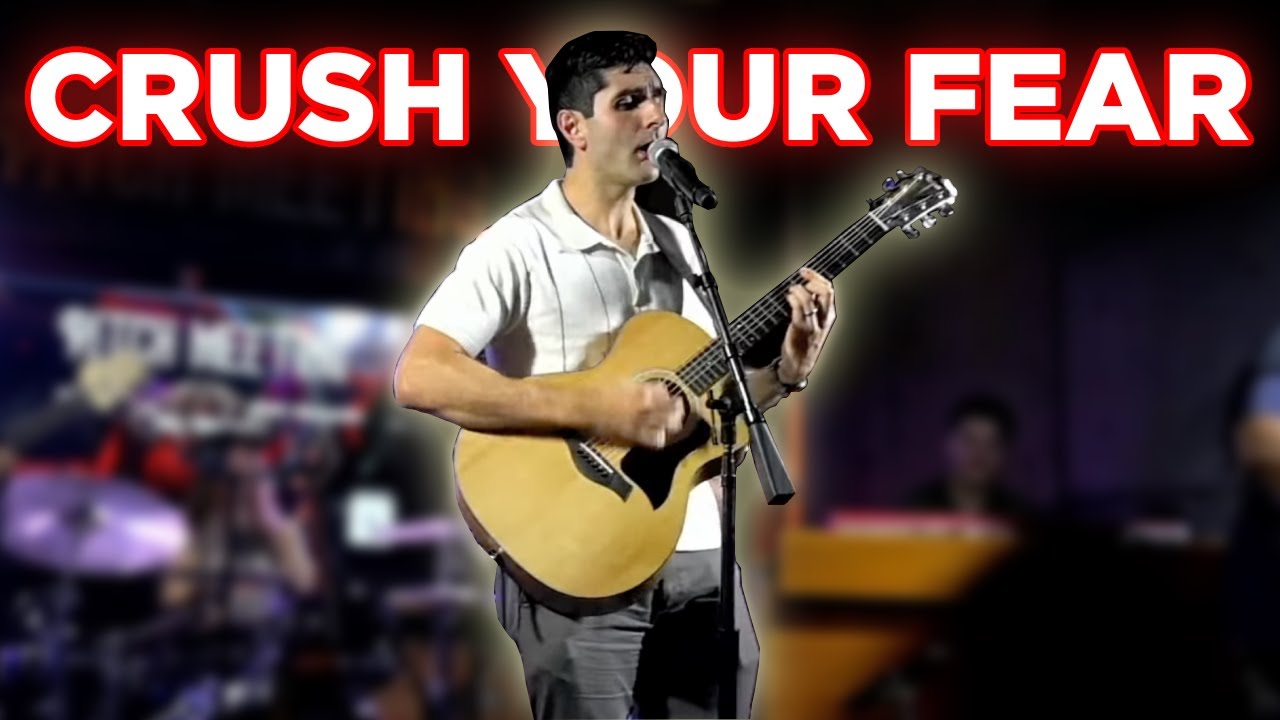
Watch This If You're Scared Of Playing Guitar In Public
In this lesson
Tap a time to watch that part. loops it, so you can slow it down and play along.
-
Key idea Frequency of live playing dissolves fear
Getting really good at home won't make the first gig comfortable; playing in public is its own skill practiced only by doing it, as frequently as possible (every jam you can find, sitting in) so no single outing carries weight. Nobody ever feels ready; fear fades only by repetition. The fear crept back for him when he played out less.
-
-
Key idea Mistakes shrink and recovery becomes invisible
Live experience doesn't eliminate mistakes; they get smaller and rarer and you learn to recover so quickly that functionally no one notices, musicians included.
-
-
Key idea A minute live is worth a hundred alone
Every minute live is worth at least 100 minutes alone: you run songs, improvise on the fly and accept what happens. Playing with better musicians beats any lesson; a great drummer and bassist make your rhythm tighter and sharpen instincts until you stop overthinking.
-
The guide
Transcript
YouTube's automatic captions. Tap a time to watch from there.
- If the idea of playing guitar in front of other people makes your stomach drop, this video is for you. And it's not because you're not talented enough. It's because you've been practicing the wrong skill with the wrong mindset. And once you start practicing the right skill with the right mindset, this fear will completely disappear. So the first point
- that we have to talk about is really what are you actually scared of when it comes to this fear of playing in public. And to me the thing that you're actually scared of is not playing in public, but it's you're scared of being judged by other people. I remember the first jazz jam session that I ever went to, which
- was like 13 years ago. I was so scared. I was preparing like the whole day practicing the one song that I knew I was going to call which was all the things you are and even then I didn't feel confident at all about it. I remember at that time I really had no idea how to improvise and I actually prepared a whole entire like one chorus
- long solo that I was going to play just so I had something to play that I knew would sound decent. And this level of overthinking, especially when it comes to improvised music, is just so bad cuz you're just constantly worried about executing every single little thing. And you think that if you make one mistake that everyone's going to hate you. This
- fear of being judged is really your ego trying to protect you. And it has nothing to do with actual music. And another place that I felt this exact same feeling is well doing exactly what I'm doing right now recording this YouTube video. When I first started this YouTube channel 8 years ago, it was
- actually exactly the same feeling that I got sitting in front of a camera just talking that I would get playing music in front of other people in public. It's very interesting. You feel your heart racing. And it's different too because the thing about these videos is that whenever I make a mistake I can just edit it out afterwards. And but yet I
- still felt the exact same way which tells me that the fear of course is irrational. So this begs the question well how do we actually get rid of the fear? And I used to think that if I just practiced and got really, really good that I would just intrinsically know that I'm so good that the first time they step on stage, everyone's going to
- be mind blown by me and I'm not going to have to worry about anything and I'm going to feel amazing. But guess what? That's completely wrong. And it's actually a limiting belief that we carry. So the real truth bomb is that playing in public is its own skill and you have to practice that skill exactly
- in the same way you practice your scales and your rhythm and your songs on guitar by yourself. The only difference is that you can't practice it by yourself. You have to go out and go to a jam session or play a gig or sit in on someone else's gig in order to practice it. Now, some of you watching may know that I
- just moved to Nashville, Tennessee, six months ago. And for the few years before I lived here, I was living in Dallas, Texas. And I had moved there after CO started. And I was playing out in public a lot less during those 5 years that I was there. But thankfully, before CO, I had played live multiple times a week
- for years already and gotten very used to it. But even after that, once I stopped playing out as much, then it started to creep back in that fear a little bit whenever I would play out. And so, it's been very nice having moved back to Nashville. I've kind of been forced to play in public a lot because
- that's how you meet people and how you network as a musician. And it's funny because you get very used to it again quickly. But even if you've never gone through periods like I have before where I was playing out all the time, we're talking four or five times a week minimum, you'll find that if you start forcing yourself to go out to like every
- possible jam session that you can find in your area or go sit in on people's gigs, you'll be surprised at how quickly you get good at the skill of playing in public and specific specifically the frequency of it has to be as high as possible because what we want to do is
- not overink every single time we play because if you make a mistake or two, it's okay because you're going to end up playing the next day or a couple days from now and you're going to forget about that mistake that you made on the last gig. So now that brings us to point number three in this whole topic which
- is that every single person that you see who's absolutely crushing it playing in public or playing with a band probably started this exact same way. They were probably also scared of playing and they had to force themselves to do it. And just like I said before, I think you'll be very surprised to how quickly you get
- comfortable with it. But regardless, they all felt the same way. And here's the real thing about it is that they never felt ready to do it. You never ever feel ready the first time or the first few times that you play guitar in public because it's an unfamiliar
- environment and it's a new skill that you simply haven't practiced. Just like if you tried any other skill for the first time, you're not going to feel comfortable with it and you're not going to be that good at it. The fear of it only fades by repetition and and nobody ever develop confidence simply by waiting and practicing. So, tying back
- into the first point, the fear of being judged, here is a very critical thing that will help you release all of that fear, which is that guess what? Nobody really cares or is paying that much attention to your playing. Most normies who are not musicians, they're going to think that you're good no matter what
- because just getting up on a stage in front of people, it commands a certain amount of respect and attention from others. And the fact of the matter is, if you're scared of doing it, imagine how scared somebody who's not a musician would be to get stuck on a stage with an instrument and be asked to do something that people are actually going to enjoy.
- They wouldn't be able to handle it whatsoever. And also along those lines, especially non-m musicians, even if you make some mistakes, they're probably not going to notice. really non-m musicians, they just want to have a fun time and they're just paying attention to the overall vibes that you're giving off. They're not like trying to nitpick what
- it is you're doing. And the last point I want to make about that is that the more that you play live, what you do is you actually don't make no mistakes whatsoever. You don't really get to this point where you never make a mistake ever again. Rather, the mistakes become smaller and they become less frequent. And functionally, you're not making any
- mistakes because even when you do make a mistake, you learn to recover from it very quickly so that it's really not noticeable whatsoever to almost anybody, including musicians. And we've been talking about non-m musicians this whole time. You might still be concerned with the opinions of the other musicians you're playing with or other musicians
- who might be in the audience. Guess what? They might notice a lot more than non-m musicians, but they're still not paying that close attention. A lot of times, especially musicians, they're too busy talking with other people or they may have gone to the back area of the place that you're at. They're not even hearing at all. So, the reality is that you don't have to be worried about
- everybody looking at what you're doing under a microscope because that's just not the way that you know your brain works, too. By the way, are you looking at other people under your microscope? Probably not. Guess what? Nobody else is doing that to you either. And that's super duper freeing and empowering. The fifth and most important point that I
- have to make that hopefully gets you out the door and playing in public for the first time is [snorts] that if you want to get as good as possible as you can be at guitar, the only way to do it is by playing live. as much as possible. I think that for every minute you play
- live, that's got to be worth at least a hundred minutes of practicing by yourself. You are getting such concentrated experience because you're running through songs. You're actually improvising solos on the fly and you have to learn to accept what happens. And the best part is if you can get
- yourself into a situation where you're playing with a bunch of musicians who are actually better than you, that's better than taking any guitar lessons in the whole entire world. As far as I'm concerned, that is the best way to learn music is by playing with people who are better than you because they're going to tell you little nuggets. They're going to give you little pieces of feedback.
- They're going to help. And then just actually listening to a great drummer, a great bass player, you're going to play with better rhythm. That's how you start learning how to play really tight. And you start developing your musical instincts and getting those really sharp. and you stop overthinking and you actually learn to do the thing that I
- know you really want to do, which is pick this piece of wood with strings up on it and just have fun making music without thinking at all. And really, once you step on a stage in front of people, that's the moment when guitar stops being a hobby and starts being real. At the end of the day, it's all
- about having the right mindset. And if you have the wrong mindset, you'll be stuck in intermediate guitar jail forever. And that's why I made this video, which is going to warn you about the worst mindset that you can have that's destroying your guitar progress. So, make sure you watch it so that you
- can make sure you don't have this mindset. And if you enjoyed this video, subscribe to the channel, hit that like button, and until next time, listen, learn, and jam.