
After each pass the video waits as long as the loop, so you can play it back.
Start slower with −, and it climbs to 100%.
Keys: Space play · ← → 5 s · [ ] set start and end · − = speed · L loop
Rhythm · Intermediate
TRANSFORM Your Guitar Solos With Accents!
In this lesson
Tap a time to watch that part. loops it, so you can slow it down and play along.
-
Key idea Learn accenting from drummers
Accenting is something drummers focus on; apply drum-book accent exercises (Ted Reed, Progressive Steps to Syncopation) to the picking hand.
-
-
Key idea Accent drills are a mindset shift
The point of the boring one-note drill is time spent in the mindset of accenting patterns, which most players never consider.
-
Key idea Solo over drums thinking only about accents
Put on a drum track and solo with one extra goal: vary accents on downbeats and upbeats. Ordinary lines sounded much more interesting.
-
About this video
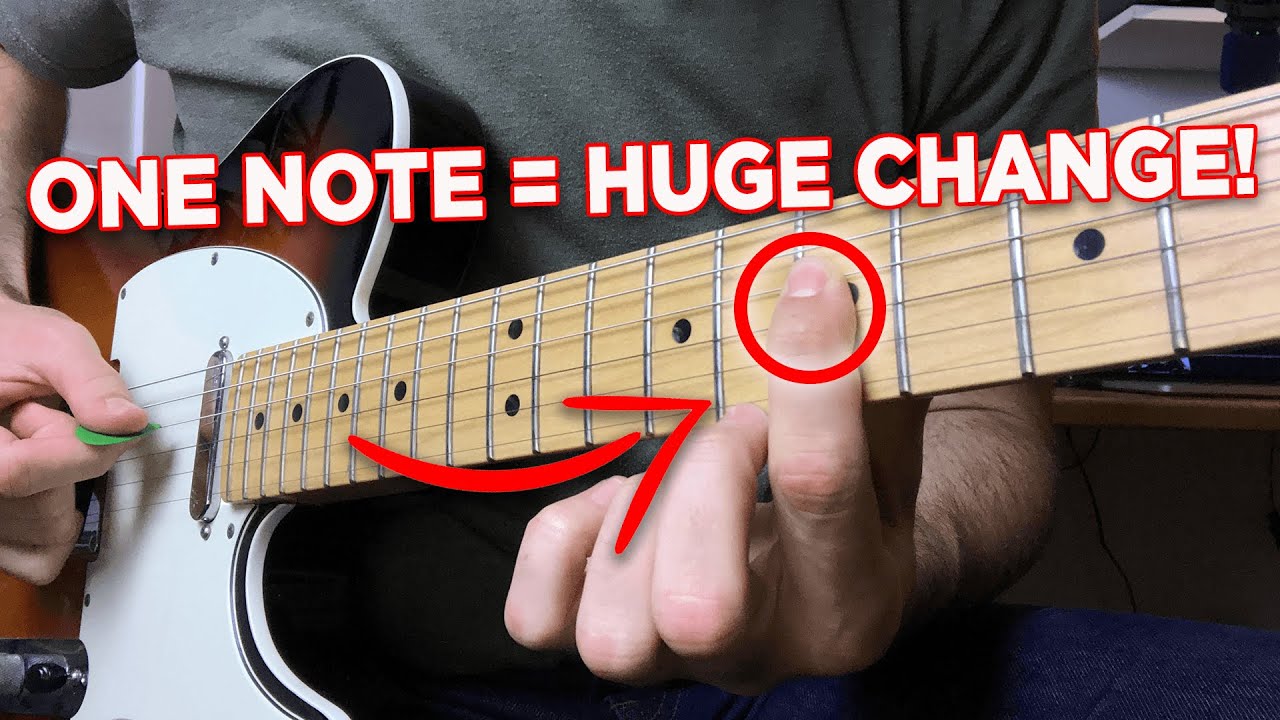
In this lesson we will learn how to use one super simple concept to make a huge transformation in our guitar solos.
When we want to improve our solos, most of the time we look to learn scales better, improve our technique, or learn licks, but there are also many other things that we can focus on that will lead to a massive change in our ability to solo.
One of those things is our accenting, and this is a topic that can often go overlooked by guitarists looking to improve, but it is something that drummers spend a lot of time working on!
Transcript
YouTube's automatic captions. Tap a time to watch from there.
- usually when we want to improve our guitar solos we think of things like learning more scales learning licks or learning how to improve our technique and play faster but there's many other super duper important things that you need to be able to focus on to really get your solos sounding their best and in today's video we're going to be discussing something that drummers focus
- a lot on which is accenting as a matter of fact we're going to be playing guitar from a drum book so this is going to be really interesting but you're going to see at the end of this lesson if you do the exercises that i show you you're going to immediately notice a huge difference in how your solos sound for
- the better so we're going to take a look at some exercises from a book called progressive steps to syncopation for the modern drummer by ted reed and we're going to apply these drum exercises to the guitar mainly with our picking hand so let's get right into it okay so we're gonna look at accented eighth note exercise
- number one here and this is a super duper simple exercise as you can see it's an infinite chain of eighth notes we just play over and over and we need to look at where these accent markings are so in this exercise we have accent markings on beat one and on beat three it's the same measure
- over and over but with an accent on beat one and beat three this is going to really establish our ability to control the volume of each individual eighth note in this line so we're gonna do is just pick any random note it could be whatever note you want i'm gonna pick this a note here on the fourth string and we're going to play through this
- exercise using alternate picking down up down up down up down up so as you can hear very clearly b1 and b3 were a lot louder than all the other notes and this is essentially what all the exercises we're going to do are
- going to consist of it's going to get us really used to having that control of our right hand and then we're going to apply this to just playing some solos so let's look at the next exercise the next exercise is very similar but now we're placing the accent on b2 and on beat four and just repeating that measure a few times getting used to how that
- sounds and feels we're going to skip ahead a little bit now and jump ahead to a little bit more complicated of an exercise that's going to mix up some different downbeats and
- upbeats so this is exercise number 12 and if you look at the accent markings you're gonna see that now we actually have an accent on the end of one and beat two right after the end of one and then the same thing on the next pair of beats we have an accent on the end of three and then right there on beat four
- so let's hear what that sounds like this one's gonna be a little bit more tricky than the previous ones so that exercise is a little bit more
- tricky than the other ones because you have to switch really quickly between accents and notes and unaccidental notes which in the other exercises you kind of have time to really prepare when you're going to accent because you have like three eighth notes before you have to pull up another accented note let's practice one more accenting pattern this
- is going to be number 18 from the book this one's actually only going to use upbeats so as you can see every single bar has an accent on the and of two and on the end of three but not the end of one not the end of four so we have these two uppy accents there right in the middle of the bar let's see what that sounds like
- now you might be wondering adam this is kind of boring this is just the same note over and over again what's the point of all this the whole point of this is a mindset shift by spending time going through these accenting patterns we are just spending time in the mindset of thinking about the accenting patterns in the first
- place and this is something that you might not have thought of at all in the past so now to kind of see the effect of all of this i'm just gonna put on a drum track now i'm going to play a solo but i'm going to think about changing the accents in the solo that's it that's the only kind of goal i have in mind with
- the solo is to make sure i'm playing some different interesting accenting patterns with all of the other things that go into playing a solo playing in a key playing different notes playing different rhythms but i'm going to be focusing a bit extra on the accents and just see what happens
- [06:22] so [06:48] so after doing all that work on my accenting patterns i felt like i was getting a much better variety of accenting some notes that were on the upbeats in that solo and accenting some notes that were on the downbeats just that alone helped so much make what i was playing sound more interesting i didn't think particularly that anything
- i played as far as the notes or lines or anything like that was anything out of the ordinary it was a lot of running scales and maybe playing some basic patterns but having that extra element of the accent patterns layered onto all of that brought it to a whole new level that i think you all can benefit greatly from
- so i want you now to do the exact same thing go pick up that book progressive steps of syncopation work through it or just work through some of the exercises that i showed you and i think you're already going to start to see a huge difference in your solos and make sure after you do that that you put on some kind of backing track a drum track and think about that while you're soloing
- think about using that concept of changing the accents and drop a comment down below and tell me how it went for you make sure you subscribe and go to jamsville.com right now