
After each pass the video waits as long as the loop, so you can play it back.
Start slower with −, and it climbs to 100%.
Keys: Space play · ← → 5 s · [ ] set start and end · − = speed · L loop
Practice and technique · Intermediate
How Long Does It Take To Get Good At Guitar?
In this lesson
Tap a time to watch that part. loops it, so you can slow it down and play along.
-
Step by step Three definitions of good, three timelines
Simple four-chord songs with basic strumming (e.g. Wagon Wheel): a few months of consistent practice (3-4x/week minimum). Rock songs with lead parts, riffs like Sweet Child O' Mine, Zeppelin solos: a year or two at 30-60 min daily, possible with almost no theory. His definition, improvising over any key and sounding good: at least four or five years at an hour a day, effective practice, playing with others and recording.
-
-
Key idea Talent = practice needed per task
Talent is real (some students do nearly everything in their first lesson) and is how much practice you need for a task, but irrelevant to action: zero practice yields nothing. Most useful mindset: assume better players practiced more or better. People who get good love music and live and breathe it.
-
-
Key idea Detach happiness from how good you are
Detaching happiness and self-worth from how good you are on a given day makes you improve faster; in-the-moment self-perception is skewed (a recording the next day often sounds fine). Focus on daily progress and enjoy where you are.
-
Transcript
YouTube's automatic captions. Tap a time to watch from there.
- The age-old question of how long does it take to get good at guitar is something that people are constantly asking. And it's something that's worth discussing because there's a lot of factors that go into it that you need to understand. And if you understand each of those factors,
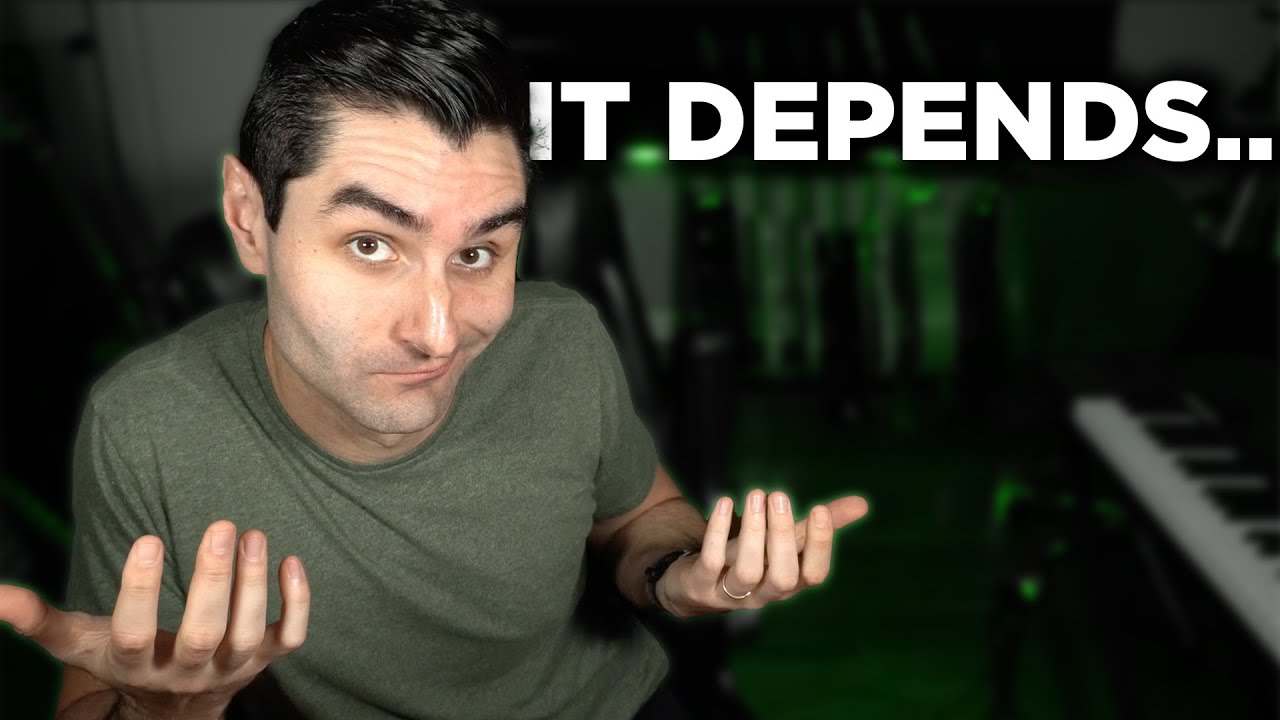
- it'll help you get a more realistic perspective on where you are in your guitar journey and will help you to just feel overall better about your situation. The first talking point we need to bring up is that it depends on what you mean by good when we're talking about how long does it take to get good at playing guitar. So, like if you're somebody who just wants to play simple
- four chord songs like Wagon Wheel or something like that, well, it's probably not going to take most people that long to be able to get to that point. Really, you just need to develop knowledge of a few chords. You need to develop some fairly decent
- rhythm in your right hand. So, just getting good at the guitar part of that isn't going to take you very long. But I will caveat it by saying most people who only care to get their guitar playing up to a level like that, they are probably also looking to sing while they're playing guitar. And that is a different skill. Of course, just singing and playing in general is a skill that's a
- little bit more difficult to develop than just singing alone is a skill. And it depends on how good of a singer do you want to be? Do you want to be this amazing virtuosic singer with amazing tone and so on and so forth? Singing is definitely something also that helps to have more natural ability with for sure. But yeah, if that's your definition of good, just somebody who can play some
- basic songs and can play basic chords with basic strumming patterns, then most people should probably be able to get there within a few months of consistent practice. Notice I say consistent practice because I definitely have seen people who even after a few months, they can't even play to that level. And it's probably because they're constantly like
- missing lessons or they're constantly just not practicing at all for weeks and weeks. So, you know, if your practicing is that inconsistent, anything that we talk about in this video is like completely out the window. We're at least assuming that you're practicing somewhat consistently, maybe at least like three or four times a week. Maybe
- not even every day, which is ideal, but you know, at least a few times a week. Now, if you're somebody who wants to be able to play more difficult rock songs, maybe that have lead parts in them, that is going to take you a bit longer. And of course, the reason is because now all of a sudden, you are making your definition of being a good guitar player
- something that has a higher floor and just kind of has more complexity to it. being able to play even something like sweet child of mine. There's a lot of people that can probably play like songs like wagon wheel or whatever basic things and probably can't play that riff from Sweet
- Child of Mine because if you think about it, I know some people actually learn that as like their first thing on guitar, which is pretty neat if you're able to learn that just right off the bat in guitar. But even that is like orders and orders of magnitude more complicated than just strumming like a G, D, E minor, and a C chord. Like you have string skipping, you have alternate
- picking, you have all these different notes that you have to memorize. So in order to get to that level, I would say for most people, it's probably going to take at least a year or two. And that's if you're practicing a lot. If you want to start being able to play, you know, solos, you want to start be able to do stuff
- like from Led Zeppelin songs and from other classic rock songs, you can probably get there in a year or two if you're practicing like every single day for at least like 30 minutes to an hour. I would say in my experience, most people can probably expect to achieve that. But again, you got to make sure
- that you're putting the time in. And also something that we're going to be talking about later, you need to make sure that you're actually using that time effectively because you could be practicing for a year or two and even practicing consistently, but if you're not using that time effectively and you're not practicing with the right methods, you're definitely going to waste a lot of time and it's going to take you a lot longer. One more thing to
- caveat about that kind of level of playing, like basically being able to execute cover songs and be able to learn some solos that are already pre-written out. We're not including improvisation in here. By the way, I just want to clarify that. You don't really actually need to know that much theory or almost any theory at all. Actually, when I was
- a kid, I was able to start playing like the solo from Stairway to Heaven and play lots of Led Zeppelin riffs and play Jimmyi Hendris riffs and play things that technically were pretty complex, especially in comparison to something like just strumming open chords. But I didn't really know any theory whatsoever. The only theory that I knew
- was just the notes like on the low E and low A string. And I think I just learned it by happen stance by playing bunches of power chords and kind of learning how to read some of those chord charts. What I said is technically wrong cuz in seventh grade I actually had like a music theory class when I was in middle school which was fantastic by the way.
- But I remember I learned all this music theory stuff on piano and actually learned how to play all 12 of my major scales in the piano, learned about key signatures. But after I left that class and I was just playing guitar again, I kind of forgot about all that stuff and I actually had to relearn it all later when I started music school in college.
- So even though I technically had some of that theory knowledge in my head somewhere, I was applying it like zero to the fretboard because I still didn't even know what notes were on like the D string, G string, the B string, and so on. So whenever I was playing a Led Zeppelin riff or something, I had no idea what key it was in or what notes I
- was playing or anything like that. I was purely memorizing all the stuff from tabs. Most people should be able to get to that level in not a super duper long amount of time, but definitely much longer than it would take just to be able to start strumming some basic songs with open chords. And then kind of the last definition of a good guitar player,
- which to me is my definition of a good guitar player, is somebody who not only can play more intricate leads and can play them and cover songs and memorize stuff, but can actually improvise and really improvise over any key and be able to actually sound good that whole
- entire time. For some people, that definition may be like an amazing, ridiculous, virtuoso guitar player, but just for me, that was always the kind of level I aspired to be at. I wanted to be the kind of person that can step in in pretty much any situation and at least play something that doesn't sound terrible. And that definitely takes a
- longer amount of time, but then you have to actually learn your theory. You have to learn the fretboard. You have to learn all of the building blocks of the guitar so that you can start to recognize them when you're actually learning songs and more importantly than that so that you can actually build up your own vocabulary and you can play your own stuff that sounds good. When
- you're presented with a situation where you have to like you're playing with a band and all of a sudden they're playing in the key of B minor. Can you actually play something that sounds good? To me, that's the kind of definition that is going to take almost everybody at least, I would say, four or five years to be able to attain. And that's taking into
- account that you're practicing at least an hour a day. I think maybe you could do it with an hour a day if you're practicing really effectively for that one hour and you're also doing other things that are critically important like playing with other people on a semi-regular basis, recording yourself, things I've talked about in other
- videos. And along those lines, if you're somebody who's looking to get to that level of guitar playing, that's exactly why I made a Janzil GPS fretboard fundamentals course, which is going to show you all the concepts that you need to understand and have down cold in your sleep on the guitar neck so that you can master the fretboard and be able to step
- into any situation, any key, and be able to play something that's going to sound good. So, make sure you head on over to jamzilla.com right now. check out the Jamsville GPS fretboard fundamentals course. So, just a couple of other thoughts to add on there. It definitely does depend on how much you practice. And of course, some of us have more
- time, some of us have less time. But if you practice more in general, it is going to get you there faster. I think that no matter how you slice it, once your goals are lofty enough, it's just going to take you a long time. It's going to take both. It's going to take lots of practice and lots of time and lots of efficient practice to be able to
- get to that really, really, really good level of being able to just step into any situation and be able to sound really good. And also, I do want to tag on there, this is something that a lot of people avoid and for good reason because I think it's something that you shouldn't really worry about too much or
- concern yourself with, but I have to point it out because it is a real thing. It depends on how talented you are. I know people always talk about hard work beats talent when talent doesn't work hard. And that is absolutely 100% true and I can prove it to you in a second. However, as someone who has
- taught a lot of guitar students, I have definitely seen in front of my own eyes certain people who they just pick up on things way faster than certain other people do. There's certain people that in their first guitar lesson, they can do almost everything that I asked them to do. And then another person in their
- first guitar lesson ever is struggling a lot more. And that's just the reality of the differences that occur in the human mind. So to me, the definition of talent is kind of like how much practice do you need to do in order to achieve a certain task? Like if somebody has to practice for like 10 hours to do the same thing
- that somebody else can do after practicing 30 minutes, then the person who only had to practice 30 minutes is technically more talented. And that is a real thing. However, I don't want to talk about that too much more because it's really not relevant as to how talented you are. you still have to put that time in because I could take
- someone who theoretically could practice for one hour and get just as good as let's say uh Eddie Van Halen. Imagine that was a thing. Somebody could practice for one hour and they would end up just as good as Eddie Van Halen. Well, guess what? If that person practices zero, they're still going to suck at guitar and that's it. And
- there's a lot of people probably walking around who have a lot of talents for different things and they don't even know about it because they just haven't tried doing the thing that they're actually talented at. So that's not something that I personally concern myself with. I always find it more effective with my own practice to assume
- that if I see somebody who's better than me, it's probably because they're practicing more or they have practiced more or they're practicing better than I am. That is functionally the most useful mindset for me to have because it's going to make me want to do better. And whatever level of talent I have, I don't really care, but I want to at least
- maximize the level of talent that I do have. The next point I want to talk about really quick is that it kind of depends on how much you love music. Like if you're somebody who just thinks it's a cool idea to sound good at guitar, but you don't really like listening to music that much or you don't just connect with music on that level, you just think it's a kind of neat thing to do. I think that
- just automatically hearing that piece of information, I know that that person's probably never going to get that good at guitar because they're just not interested in enough. The people who get really good are the people who like literally live and breathe this stuff. Like I go to sleep sometimes thinking about all the stuff that I practice that
- day and thinking about what I want to practice tomorrow and imagining how cool it's going to be when I get that thing down that I'm working on. Like this is something that seeps into the rest of my life. It's not just like when I sit down and play guitar, but it's just a mindset that I have overall. Like I'm always thinking about guitar. I'm always living
- and breathing guitar. Not technically always, of course, but for the most part. And if you find yourself like at work all day and you're thinking about guitar and you're listening to music, I think that just that alone is going to guarantee that you're going to be pretty freaking successful at guitar. So, the last thing I want to just leave you off on is that I think the sooner that you
- detach your happiness level with your playing from how good you are, ironically enough, that's going to make you get good a lot faster. Because sometimes people, they just can't have as much fun, you know, when they're not like where they want to be. And I learned a long time ago that I need to just let go of that. I can't compare
- myself to other people. And I can't like let my self-worth and happiness be attached to like how well I'm playing on any given day or how good I think I am. That's something that es and flows all the time by the way. Some days I feel amazing and sometimes my playing feels amazing and some days I feel like I sound like crap and then if I listen
- back to like a recording the next day I'll be like actually I sounded pretty good. The way that we perceive ourselves in any given moment can often times be very skewed from reality and you have to keep that in mind. So just stop even worrying about how good you are. Worry about making progress every day and have fun just with where you're at. And as
- soon as you let go of that, ironically, I bet you you start seeing your guitar progress go a lot faster. Now, with that being said, it definitely is more fun to play guitar when you are better and you can do more things. And that's why I made this video, which is talking about why most people quit guitar right before
- it gets fun. I think it's something that's very important and needs to be addressed. So, go check that video out. And if you're interested in a free consultation for onetoone coaching with me, then click the link in the description below. You want to master the guitar fretboard, go to jamsville.com, check out Jamsville GPS fretboard fundamentals course, subscribe to the channel, hit that thumbs up button, and until next time, listen,
- learn, and jam. And